Comparison

U7 Pro XG vs U7 Pro XG Wall: $80 for the Wall Mount

The $279 U7 Pro XG Wall matches the $199 ceiling U7 Pro XG on streams, data rates, 10 GbE uplink, PoE+ draw and coverage. The $80 buys a flat wall housing.

Should I buy the UniFi U7 Pro XG or the U7 Pro XG Wall?

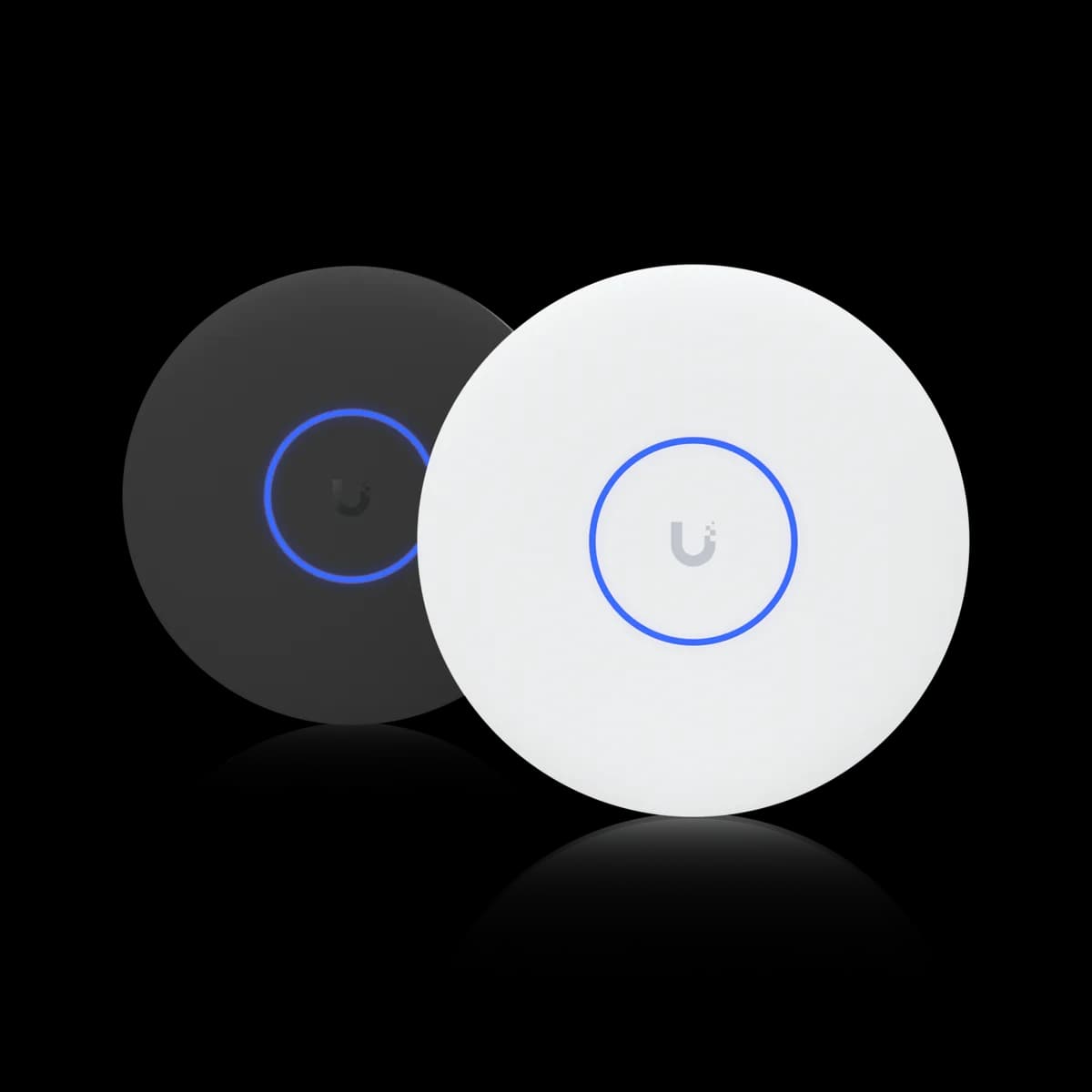
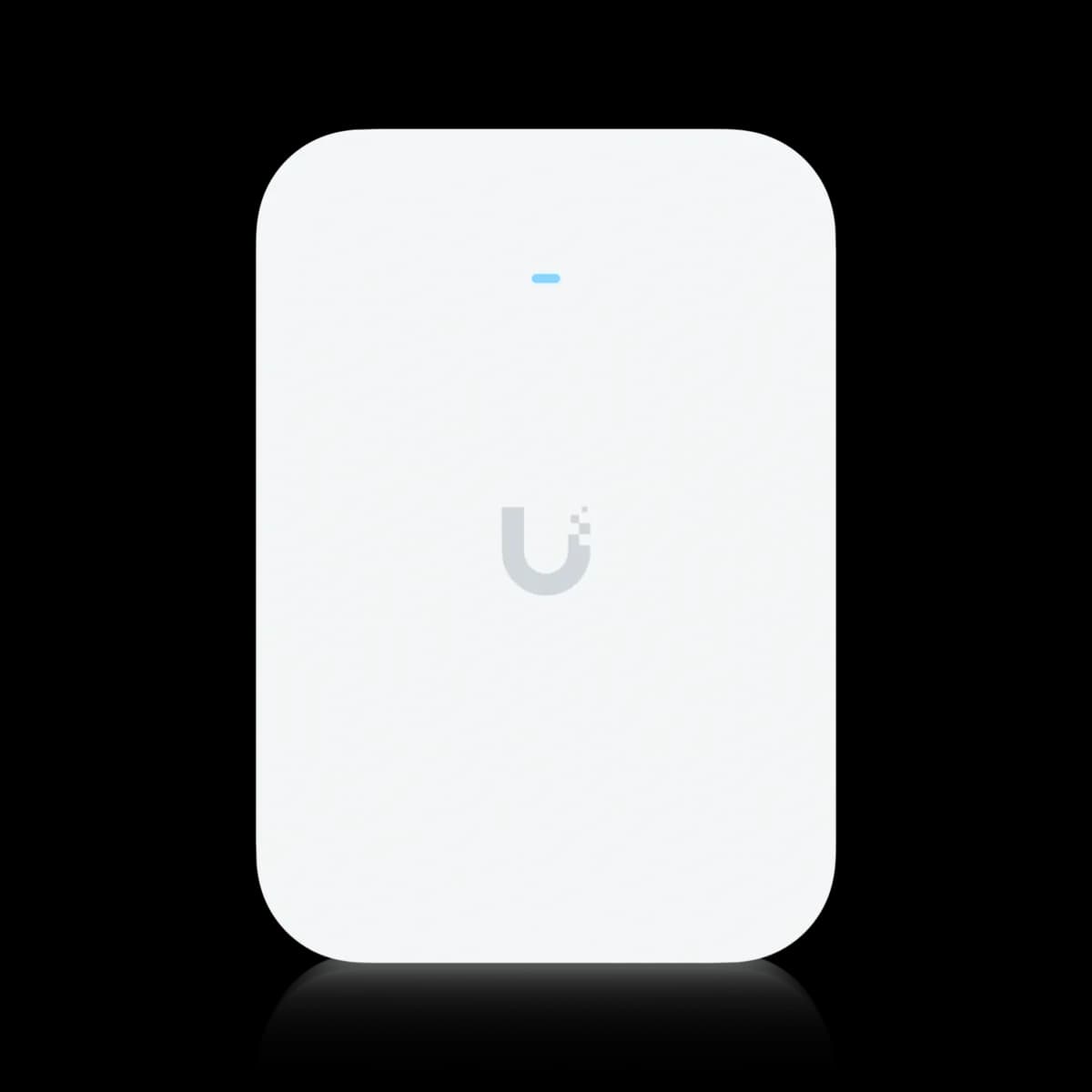
They carry the same ratings, for two different surfaces. The U7 Pro XG ($199) and the U7 Pro XG Wall ($279) are both six-stream tri-band Wi-Fi 7 APs rated at 5.8 Gbps on 6 GHz, 140 m² and 300+ clients, with a 10 GbE uplink on PoE+ at 22 W. The ceiling model is a 206 mm disc that Ubiquiti lists for ceiling or wall. The Wall model is a flat 155 × 108 mm rectangle, 33.5 mm deep and 245 g lighter, listed for wall mounting only. Buy the ceiling model wherever a ceiling run is possible, and the Wall model where it is not.

Spec Comparison

SpecUniFi U7 Pro XGUniFi U7 Pro XG Wall
Wi-Fi StandardWi-Fi 7 (802.11be)Wi-Fi 7 (802.11be)
BandsTri-band (2.4 + 5 + 6 GHz)Tri-band (2.4 + 5 + 6 GHz)
6 GHz Rate5.8 Gbps (BW320)5.8 Gbps (BW320)
5 GHz Rate4.3 Gbps (BW240)4.3 Gbps (BW240)
2.4 GHz Rate688 Mbps (BW40)688 Mbps (BW40)
Spatial Streams66
5 GHz MIMO2×22×2
Uplink Port(1) 10 GbE RJ45(1) 10 GbE RJ45
Power MethodPoE+PoE+
Max Power Draw22 W22 W
Max Clients300+300+
Coverage Area140 m² (1,500 ft²)140 m² (1,500 ft²)
Dimensions⌀206 × 32.5 mm155 × 108 × 33.5 mm
Weight750 g505 g
Max TX Power6 GHz 24 dBm · 5 GHz 26 dBm · 2.4 GHz 23 dBm6 GHz 24 dBm · 5 GHz 26 dBm · 2.4 GHz 23 dBm
5 GHz Antenna Gain5 dBi6 dBi
6 GHz Antenna Gain6 dBi6 dBi
Operating Temp-30 to 40 °C (-22 to 104 °F)-30 to 40 °C (-22 to 104 °F)

Pricing & Positioning

What does $80 buy? A different shape, and no extra radio. The U7 Pro XG Wall ($279) is a flat 155 × 108 × 33.5 mm unit at 505 g, listed for wall mounting. The U7 Pro XG ($199) is a ⌀206 × 32.5 mm disc at 750 g, listed for ceiling or wall. The data rates, coverage and client ratings match. (U7 Pro XG Wall specs)

Few matchups on this site are this narrow. The two spec sheets agree on the data rates, the uplink, the power draw, the client rating and the coverage rating. In fact, the decision is made by the building and not by the network.

That said, the premium is real. At $80, the Wall model costs 40% more than the ceiling model for the same ratings. A buyer who can run a cable to the ceiling should therefore take the cheaper unit and spend the difference elsewhere.

The ceiling model is one of the nine ceiling APs this site tracks, and U7 Pro vs U7 Pro XG covers the step below it. Additionally, the Access Points hub lists the wall and outdoor models beside the ceiling range.

What Does Not Change

Is it the same radio? On every published rating, yes. Both list six spatial streams, 2×2 on each band, 5.8 Gbps on 6 GHz, 4.3 Gbps on 5 GHz and 688 Mbps on 2.4 GHz. Both are rated for 140 m² and 300+ clients, and both list 24 dBm of transmit power on 6 GHz and 26 dBm on 5 GHz. (U7 Pro XG specs)

This is the section that settles most purchases, because the intuition is that a dearer model must be the stronger one. It is not. After all, the two sheets give no performance reason to choose the Wall model.

One row does differ, and only slightly. The Wall model lists 6 dBi of antenna gain on 5 GHz against 5 dBi on the ceiling model, with 6 GHz at 6 dBi on both. However, the coverage and client ratings are the same, so that single decibel does not show up in any figure Ubiquiti publishes.

In addition, both reach 6 GHz, which Wi-Fi 6E clients can use as well as Wi-Fi 7 clients. What Wi-Fi 7 adds on that band is 320 MHz channels, and that is where the 5.8 Gbps figure comes from.

Wall or Ceiling: What Ubiquiti Lists

Can the ceiling model go on a wall? Ubiquiti lists it for both. The U7 Pro XG sheet reads Ceiling, Wall, with a Lite Mount included. The U7 Pro XG Wall sheet reads Wall and nothing else. The difference on a wall is the footprint: a 206 mm disc against a 155 × 108 mm rectangle. (U7 Pro XG specs)

That row changes the question. The Wall model is not the only way to put this radio on a wall. It is the smaller and lighter way to do it. For instance, a 206 mm disc at outlet height in a hallway is a large object, and a flat rectangle the size of a paperback is not.

Depth is nearly the same, at 33.5 mm against 32.5 mm, so neither stands further off the surface. The weight gap is wider: 505 g against 750 g. As a result, the Wall model puts less load on drywall or plaster.

Keep in mind that Ubiquiti publishes one coverage rating for each model and does not say how mounting position changes it. This page will not guess. A wall unit faces into the room from one side, and a ceiling unit sits above it, so plan placement on the floor plan and not on the rating alone.

The 10 GbE Port Needs the Same Switch

What must the switch supply? The same on both: PoE+ at up to 22 W, and a 5 or 10 GbE port if the uplink is to be used. Each lists (1) 10 GbE RJ45. Ubiquiti describes the Wall model as having "1/2.5/5/10 GbE support", so on a 2.5 GbE port it links at 2.5 GbE. (U7 Pro XG Wall specs)

The port is the reason the XG pair exists, and it has the same catch on both models. On most UniFi switches, however, 10 GbE lives on SFP+ uplinks, which carry no PoE. The USW Pro HD 24 PoE, which this site tracks, has two 10 GbE RJ45 ports that also supply PoE++.

Behind a 2.5 GbE PoE+ port, either XG performs as a U7 Pro does. In addition, the U7 Pro costs $189, which is $90 less than the Wall model. Therefore, a rack with no 5 or 10 GbE PoE ports is paying for a port it cannot use yet.

Note that the Wall model has one RJ45 port and no pass-through. The spec sheet lists "(1) 10 GbE RJ45 port" under its networking interface and no downlink ports, so it does not double as a wall-plate switch.

Software Version and Finish

What does each require? The U7 Pro XG Wall lists UniFi Network 10.0 and later. The U7 Pro XG lists 9.0.114 and later for the white unit and 9.1.120 and later for the black one. Both share an operating range of -30 to 40 °C, and neither sheet lists a weatherproofing row. (U7 Pro XG Wall specs)

The version row matters for anyone running an older controller. A site pinned below UniFi Network 10.0 can adopt the ceiling model and cannot adopt the Wall model, going by the two sheets. Accordingly, check the controller version before ordering.

Finally, finish is the other small difference. Ubiquiti sells the ceiling U7 Pro XG in white and in black, and lists separate software versions for each. The Wall model's sheet lists a single version, and this page makes no claim about other finishes.

Of course, neither is an outdoor unit. For a location exposed to weather, U7 Pro vs U7 Pro Outdoor covers the model built for it.

Which to Buy

Buy the U7 Pro XG wherever a cable can reach the ceiling. These are the cases where it is simply the right access point:

  • Any room with ceiling access. The data rates, coverage and client ratings match, and it costs $80 less.
  • A wall mount where size does not matter. Ubiquiti lists the ceiling model for walls as well.
  • A controller below UniFi Network 10.0. The ceiling model lists 9.0.114 or 9.1.120.

Buy the U7 Pro XG Wall when the wall is the only option and the unit will be seen. For example, that covers finished ceilings with no access above, rentals, and a hallway drop at outlet height. Overall, the $80 buys a smaller and lighter housing, and it buys nothing else.

However, if the switch has no 5 or 10 GbE PoE ports, neither XG earns its price today. U7 Pro vs U7 Pro XG weighs the $10 between the ceiling models, and how to choose a UniFi access point covers the ceiling range.

Frequently Asked Questions

The housing and the mounting. Both are six-stream tri-band Wi-Fi 7 access points rated at 5.8 Gbps on 6 GHz, 4.3 Gbps on 5 GHz, 140 m² and 300+ clients, with a 10 GbE RJ45 uplink on PoE+ at a maximum of 22 W. The U7 Pro XG ($199) is a ⌀206 × 32.5 mm disc at 750 g that Ubiquiti lists for ceiling or wall mounting. The U7 Pro XG Wall ($279) is a flat 155 × 108 × 33.5 mm unit at 505 g, listed for wall mounting, and it requires UniFi Network 10.0 or later.

No. Both list the same data rates on all three bands, the same six spatial streams at 2×2 per band, the same transmit power, the same 140 m² coverage rating and the same 300+ client rating, and both uplink at 10 GbE. The only radio row that differs is 5 GHz antenna gain, at 6 dBi on the Wall model against 5 dBi on the ceiling model.

Yes. Ubiquiti's spec sheet for the ceiling U7 Pro XG lists its mounting as ceiling or wall, with a Lite Mount included. The U7 Pro XG Wall lists wall mounting only. On a wall the difference is size and weight: a 206 mm disc at 750 g against a 155 × 108 mm rectangle at 505 g.

PoE+ (802.3at), with a listed maximum draw of 22 W, which is the same as the ceiling U7 Pro XG. To use its 10 GbE uplink the switch port also has to run at 5 or 10 GbE while supplying that power. On a 2.5 GbE PoE+ port it links at 2.5 GbE.

Its spec sheet lists a single 10 GbE RJ45 port as its networking interface and no downlink or pass-through ports. It is an access point for a wall, and the sheet gives no indication that it works as a wall-plate switch.

Ubiquiti lists UniFi Network 10.0 and later for the U7 Pro XG Wall. The ceiling U7 Pro XG lists 9.0.114 and later for the white unit and 9.1.120 and later for the black unit, so a controller that has not reached 10.0 can run the ceiling model and not the Wall model.