Comparison

U7 Pro vs U7 Pro Outdoor: Same Rates, Built for Weather

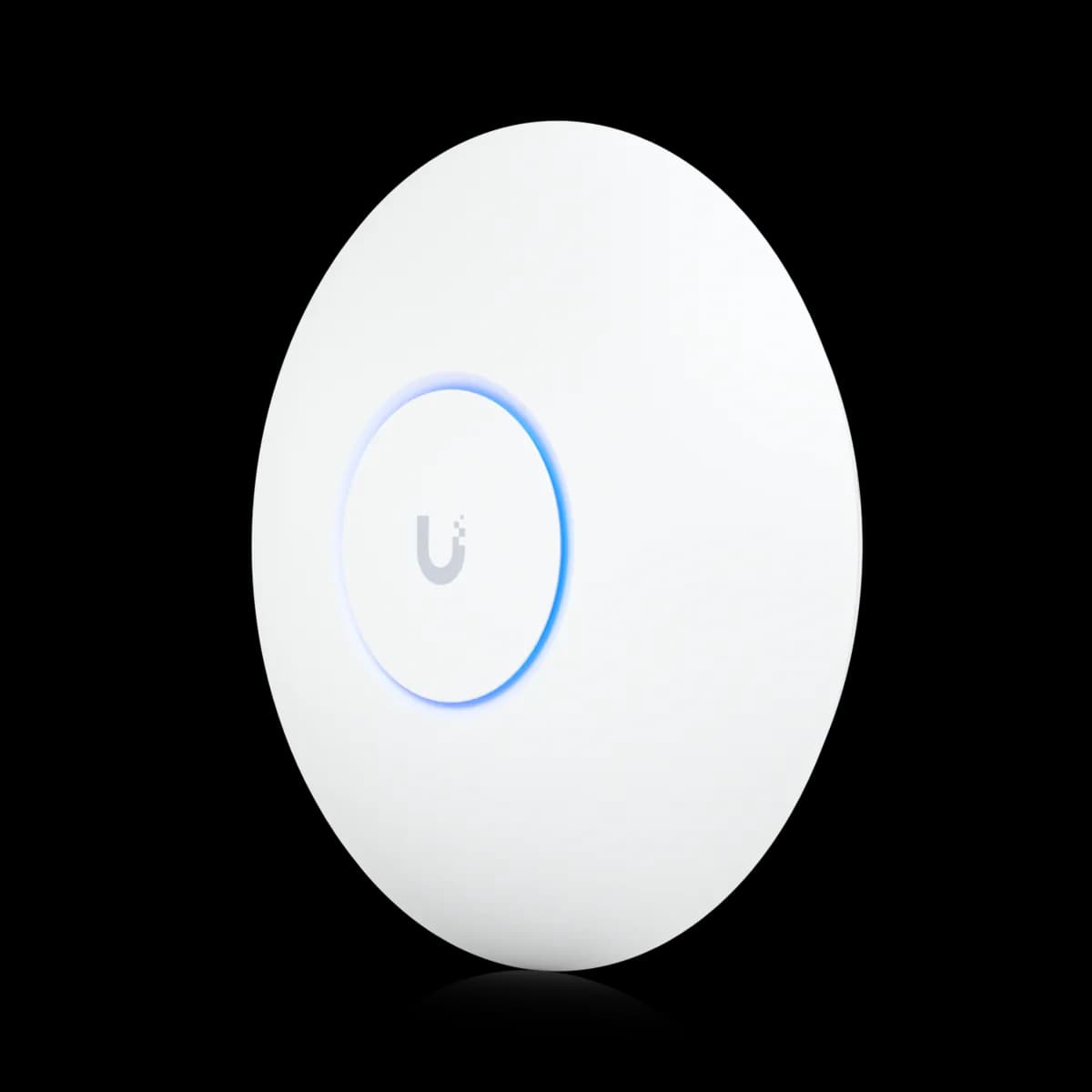
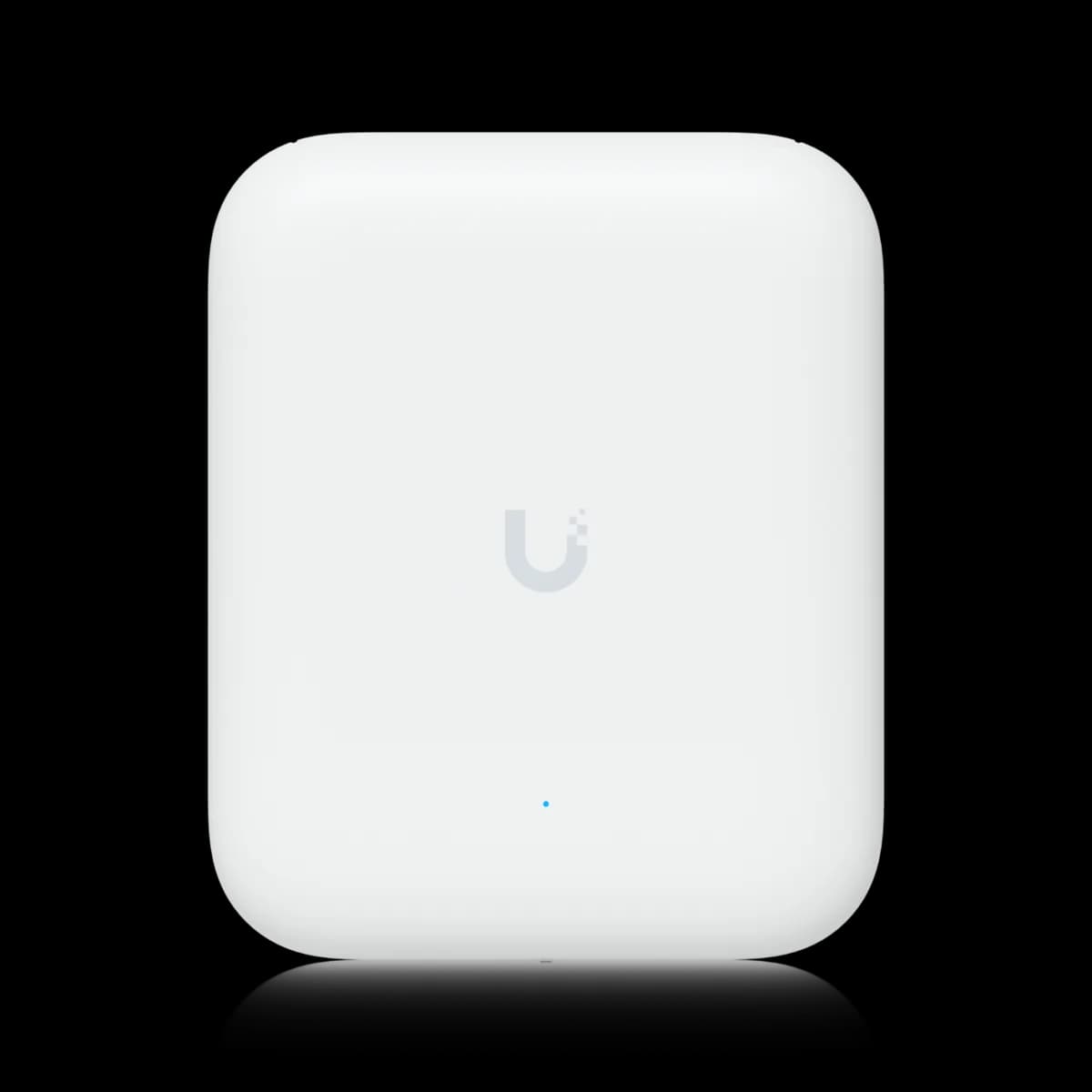
The $279 U7 Pro Outdoor shares the $189 U7 Pro's six-stream radio, PoE+ draw and 2.5 GbE uplink. The $90 buys weatherproofing, a directional antenna and 465 m².

Should I buy the UniFi U7 Pro or the U7 Pro Outdoor?

They list the same data rates and stream counts, in two enclosures. Both the U7 Pro ($189) and the U7 Pro Outdoor ($279) are six-stream tri-band Wi-Fi 7 access points rated at 5.8 Gbps on 6 GHz and 300+ clients, on PoE+ at 21 W with a 2.5 GbE uplink. The Outdoor adds an IPX6 housing that reaches IP67 with a cable-gland door kit, a directional antenna at 10 to 11 dBi, a 60 °C upper limit, and wall and pole mounts. Ubiquiti rates it for 465 m² against 140 m². Buy the U7 Pro for any room with a ceiling, and the Outdoor for a yard, a patio or an outbuilding.

Spec Comparison

SpecUniFi U7 ProUniFi U7 Pro Outdoor
Wi-Fi StandardWi-Fi 7 (802.11be)Wi-Fi 7 (802.11be)
BandsTri-band (2.4 + 5 + 6 GHz)Tri-band (2.4 + 5 + 6 GHz)
6 GHz Rate5.8 Gbps (BW320)5.8 Gbps (BW320)
5 GHz Rate4.3 Gbps (BW240)4.3 Gbps (BW240)
2.4 GHz Rate688 Mbps (BW40)688 Mbps (BW40)
Spatial Streams66
5 GHz MIMO2×22×2
Uplink Port(1) 1/2.5 GbE RJ45(1) 1/2.5 GbE RJ45
Power MethodPoE+PoE+
Max Power Draw21 W21 W
Max Clients300+300+
Coverage Area140 m² (1,500 ft²)465 m² (5,000 ft²)
Dimensions⌀206 × 46 mm170 × 208 × 66.5 mm (121.8 mm deep with mount)
Weight680 g1.2 kg (1.33 kg with mount)
Max TX Power6 GHz 23 dBm · 5 GHz 26 dBm · 2.4 GHz 23 dBm6 GHz 26 dBm (Extended Range mode, FCC/IC only) · 5 GHz 26 dBm · 2.4 GHz 23 dBm
5 GHz Antenna Gain6 dBiDirectional internal 11 dBi (90° × 45°) · external omni 8 dBi (360° × 15°)
6 GHz Antenna Gain5.8 dBiDirectional internal 10 dBi (90° × 45°)
Operating Temp-30 to 40 °C (-22 to 104 °F)-30 to 60 °C (-22 to 140 °F)
WeatherproofingIPX6; IP67 with the cable-gland door kit
Wind Loading74.6 N at 200 km/h
Pole Mount Diameter25–63.5 mm (1–2.5")

Pricing & Positioning

What does $90 buy? The enclosure and the antenna. The U7 Pro Outdoor ($279) lists IPX6 weatherproofing, or IP67 with its cable-gland door kit, a directional internal antenna, 465 m² of coverage and a 60 °C upper limit. The U7 Pro ($189) lists none of those, and the same six streams and data rates. (U7 Pro Outdoor specs)

Most matchups on this site come down to a radio or a port. This one does not, because the two sheets agree on every data rate, stream count and client rating. In fact, the question here is not which access point is better. It is where the access point is going to be bolted.

Accordingly, the $90 is easy to judge. It is a 48% premium for a housing that survives rain, an antenna that throws signal in one direction, and mounts for a wall or a pole. Indoors, none of that is worth paying for. Outdoors, all of it is the point.

The U7 Pro is one of the nine ceiling APs this site tracks. The Outdoor sits apart from them, built for the weather. The Access Points hub lists the whole category. Additionally, how to choose a UniFi access point covers the indoor ceiling range in full.

What Does Not Change

Is it the same radio? On every rate and stream figure, yes. Both list six spatial streams, 2×2 on each band, 5.8 Gbps on 6 GHz, 4.3 Gbps on 5 GHz and 688 Mbps on 2.4 GHz. Both are rated for 300+ clients, draw 21 W on PoE+, and uplink at 1 or 2.5 GbE. (U7 Pro specs)

This is the section that saves money. A buyer who assumes the outdoor unit is the stronger access point will be tempted to put one in a garage or a covered porch for the performance. However, the rate and stream rows are identical, so the only thing gained indoors is a larger housing on the wall.

The shared switch requirements matter just as much. Both run on a PoE+ port at 21 W, so the Outdoor needs nothing the indoor model did not. Both top out at 2.5 GbE on the wire. Accordingly, a USW Pro Max 24 PoE or a USW Flex 2.5G 8 PoE feeds either one at full uplink speed.

In addition, both reach 6 GHz, which Wi-Fi 6E clients can use as well as Wi-Fi 7 clients. What Wi-Fi 7 adds on that band is 320 MHz channels and the rest of the newer feature set.

The Antenna Is the Real Difference

What is different about the antenna? Direction and gain. The U7 Pro Outdoor lists a directional internal antenna at 10 dBi on 6 GHz and 11 dBi on 5 GHz, in a 90° × 45° pattern, plus external omni antennas at 8 dBi on 5 GHz. The U7 Pro lists 5.8 dBi and 6 dBi. (U7 Pro Outdoor specs)

A ceiling access point spreads its signal around a room. A directional antenna, however, concentrates it into a beam. That is what an outdoor unit on a wall needs when the people are all on one side of it. What's more, the coverage ratings are far apart: Ubiquiti lists 465 m² for the Outdoor against 140 m² for the U7 Pro. Those are Ubiquiti's catalog ratings, not measurements this site has made.

Note that the external omni antennas are listed for two bands: 5 GHz, at 8 dBi, and 2.4 GHz, at 6 dBi. On 6 GHz the sheet lists the directional internal antenna and nothing else, so the omni option does not extend to that band.

Finally, the 6 GHz power figure carries a condition. Ubiquiti lists 26 dBm on 6 GHz for the Outdoor against 23 dBm for the U7 Pro, and notes that the figure applies "With 6 GHz Extended Range mode. Available in FCC/IC region only". Its product description calls this "extended-range AFC 6 GHz support". This page goes no further than those two statements.

Weather Rating, Temperature and Mounting

Can the U7 Pro go outside? Its spec sheet lists no weatherproofing row at all. The U7 Pro Outdoor lists IPX6, and IP67 with the cable-gland door kit, along with -30 to 60 °C and wall and pole mounts included. The U7 Pro lists -30 to 40 °C and ceiling or wall mounting. (U7 Pro Outdoor specs)

The two share a lower temperature limit of -30 °C, which surprises people. The difference is at the top, where the Outdoor is listed to 60 °C and the U7 Pro to 40 °C. For example, a unit in direct summer sun on a south-facing wall is where that margin matters.

Keep in mind that the two ratings describe two installations. Ubiquiti's store page puts it this way: "IPX6-rated protection supports outdoor deployments when installed with the included seal and mount, and upgrades to IP67 when using the cable-gland door kit." The seal and mount are in the box. Confirm whether the door kit is as well before counting on IP67.

The mounting hardware differs too. The Outdoor ships with wall and pole mounts, for poles from 25 to 63.5 mm, and it is 121.8 mm deep on its bracket. It weighs 1.2 kg, or 1.33 kg with the mount, against 680 g for the U7 Pro, and the sheet lists a wind loading of 74.6 N at 200 km/h. Of course, that is a load for an exterior wall or a pole, not for a ceiling tile.

What the Switch Port Has to Supply

What does the Outdoor need from the switch? The same as the indoor model. Both list PoE+ with a maximum draw of 21 W, and both uplink at 1 or 2.5 GbE. A port that runs a U7 Pro at full speed runs a U7 Pro Outdoor the same way. (U7 Pro specs)

The port is identical, so the planning moves to the cable. An outdoor run is usually longer than an indoor one, and it passes through an exterior wall. However, the spec sheet states no cable or surge requirement, so this page will not invent one. Ubiquiti's store page does list its $12.50 Ethernet Surge Protection Outdoor (10kA) alongside this model. Treat that as an accessory, and follow local code for exterior cabling.

Budget works the same way as indoors. At 21 W the Outdoor takes the same share of a switch's PoE budget as a U7 Pro, and PoE budget planning shows how to total a mixed load. In addition, a 2.5 GbE port matters as much here as it does inside, because the radio rates are the same.

Of course, what the Outdoor does not need is PoE++. That class starts with the U7 Pro XGS at 29 W, and neither of these two comes near it.

Which to Buy

Buy the U7 Pro for anything with a roof and four walls. These are the cases where it is simply the right access point:

  • Any indoor room. The data rates and stream counts are the same, and the ceiling model costs $90 less.
  • A garage, a workshop or a covered porch that stays dry. The Outdoor's antenna is aimed, which is not what an enclosed space needs.
  • A ceiling mount. The Outdoor lists wall and pole mounting only.

Buy the U7 Pro Outdoor when the access point will be rained on. For instance, that means a yard, a patio, a driveway, a pool deck or the outside wall of an outbuilding. It is also the right unit when the people are all on one side of the mounting point, since the antenna is directional. Overall, the $90 is a small price for a housing rated for the weather.

However, if the unit has to go on a ceiling under cover, the choice is among the ceiling models. How to choose a UniFi access point sets out that range, and U7 Pro vs U7 Pro XG covers the step above the U7 Pro.

Frequently Asked Questions

The enclosure, the antenna and the mounting. Both are six-stream tri-band Wi-Fi 7 access points with a 6 GHz band, rated at 5.8 Gbps on 6 GHz, 4.3 Gbps on 5 GHz and 300+ clients, and both run on PoE+ at 21 W with a 1 or 2.5 GbE uplink. The U7 Pro Outdoor ($279) adds IPX6 weatherproofing, rising to IP67 with the cable-gland door kit, a directional internal antenna at 10 to 11 dBi, external omni antennas, an operating range up to 60 °C, and wall and pole mounts. Ubiquiti rates it for 465 m² against 140 m² for the $189 U7 Pro.

Not on any published data rate. Both list 5.8 Gbps on 6 GHz, 4.3 Gbps on 5 GHz and 688 Mbps on 2.4 GHz, six spatial streams, 2×2 on each band and a 300+ client rating, and both uplink at 1 or 2.5 GbE. The Outdoor's advantages are antenna gain, a larger rated coverage area and a weatherproof housing.

Ubiquiti's spec sheet for the U7 Pro lists no weatherproofing rating, and lists ceiling and wall mounting with an operating range of -30 to 40 °C. The U7 Pro Outdoor is the model that lists IPX6, and IP67 with the cable-gland door kit, along with an operating range of -30 to 60 °C. For a location exposed to rain, the Outdoor is the one with a rating for it.

Yes. Ubiquiti lists it as Wi-Fi 7 with 6 GHz support, at 5.8 Gbps on that band, and describes it as having extended-range AFC 6 GHz support. The spec sheet lists a 6 GHz maximum transmit power of 26 dBm with the note that this applies with 6 GHz Extended Range mode, available in FCC/IC regions only. On 6 GHz the antenna row lists the directional internal antenna alone.

PoE+ (802.3at), with a listed maximum draw of 21 W. That is the same power method and the same draw as the indoor U7 Pro, so any switch port that runs one runs the other. Its uplink is a single 1 or 2.5 GbE RJ45 port, so a multi-gig PoE+ switch port lets it use its full uplink speed.

On a wall or a pole. Ubiquiti lists both mounts as included, with a pole diameter range of 25 to 63.5 mm. The unit measures 170 × 208 × 66.5 mm, or 121.8 mm deep on its mount, and weighs 1.2 kg, or 1.33 kg with the mount. The spec sheet lists a wind loading of 74.6 N at 200 km/h.