Comparison

UniFi U7 Lite vs U6 Pro: Wi-Fi 7 or 4×4?

The $99 U7 Lite (Wi-Fi 7, 2×2, 2.5 GbE uplink) against the $159 U6 Pro (Wi-Fi 6, 4×4 on 5 GHz): both dual-band, both 802.3af PoE — and which one to buy.

Should I buy the UniFi U7 Lite or the U6 Pro?

For most rooms, buy the U7 Lite: at $99 it is $60 cheaper than the U6 Pro, runs on the same standard 802.3af PoE (13 W), and adds a 2.5 GbE uplink plus Wi-Fi 7 features the U6 Pro will never get. Neither AP has a 6 GHz radio. The trade is the U7 Lite's newer 2×2 radio against the U6 Pro's older 4×4 5 GHz radio, 140 m² coverage rating, and 250+ client rating. Buy the U6 Pro only for a dense, high-client room where four 5 GHz streams matter more than the uplink or the generation.

Spec Comparison

SpecUniFi U7 LiteUniFi U6 Pro
Wi-Fi StandardWi-Fi 7 (802.11be)Wi-Fi 6 (802.11ax)
BandsDual-band (2.4 + 5 GHz)Dual-band (2.4 + 5 GHz)
5 GHz Rate4.3 Gbps (BW240)4.8 Gbps (BW160)
2.4 GHz Rate688 Mbps (BW40)573.5 Mbps (BW40)
Spatial Streams46
5 GHz MIMO2×24×4
Uplink Port(1) 2.5 GbE RJ45(1) GbE RJ45
Power MethodPoEPoE
Max Power Draw13 W13 W
Max Clients200+250+
Coverage Area115 m² (1,250 ft²)140 m² (1,500 ft²)
Dimensions⌀171.5 × 33 mm⌀197 × 35 mm
Weight313 g580 g
Max TX Power5 GHz 24 dBm · 2.4 GHz 23 dBm5 GHz 26 dBm · 2.4 GHz 22 dBm
5 GHz Antenna Gain5 dBi6 dBi
Operating Temp-30 to 40 °C (-22 to 104 °F)-30 to 60 °C (-22 to 140 °F)

Pricing & Positioning

Which costs less? The U7 Lite lists at $99 and the U6 Pro at $159 — the newer Wi-Fi 7 AP is $60 cheaper. Both draw 13 W on standard 802.3af PoE, so an existing 802.3af switch or injector powers either. (U7 Lite specs)

The cheaper AP here is also the newer one, which is unusual in the UniFi range. The U7 Lite arrived in February 2025 as the $99 entry to Wi-Fi 7, priced level with the U6 Lite it succeeds. Launched in late 2021, the U6 Pro spent years as the mainstream Wi-Fi 6 pick and still sells at $159.

A buyer about to spend $159 on the proven U6 Pro now sees the Wi-Fi 7 U7 Lite for $60 less and wants to know what the extra money still buys. It buys a 4×4 5 GHz radio and more rated reach. It does not buy a newer generation or a faster port. For the rest of the range, how to choose a UniFi access point maps all nine ceiling models and the Access Points hub lists them side by side.

Neither Has 6 GHz: What Wi-Fi 7 Buys Here

Does the U7 Lite have 6 GHz? No. The U7 Lite is dual-band Wi-Fi 7 — 2.4 GHz and 5 GHz only, like the Wi-Fi 6 U6 Pro. It adds Wi-Fi 7 features on those bands (4K-QAM, multi-link operation, preamble puncturing, and a 240 MHz mode few clients use), while the 6 GHz band starts at the U7 Pro. (U7 Lite specs)

Set expectations before comparing rates. Clean, wide 6 GHz spectrum is the headline Wi-Fi 7 benefit, and neither of these APs has it. The U7 Lite brings Wi-Fi 7 to the two existing bands: its 5 GHz radio lists 4.3 Gbps (BW240) through 240 MHz channels, and its 2.4 GHz radio reaches 688 Mbps (BW40). The U6 Pro lists 4.8 Gbps (BW160) on 5 GHz and 573.5 Mbps (BW40) on 2.4 GHz.

Those 5 GHz numbers are closer than the generations suggest, and they reward different clients. The U6 Pro's figure comes from a 4×4 radio serving up to four streams at 160 MHz. The U7 Lite's comes from a 2×2 radio using wider channels and denser modulation that only Wi-Fi 7 clients can exploit. A phone or laptop with two Wi-Fi 6 streams can hold the same 160 MHz, two-stream link on either AP once the radio is set to 160 MHz (a width that needs DFS channels on both). Day to day, the Wi-Fi 7 features that count are preamble puncturing and multi-link operation, and Ubiquiti lists both for the U7 Lite in its launch post. On a dual-band AP, multi-link operation pairs 2.4 and 5 GHz, and Wi-Fi 7 and MLO explained sets out why that buys lower latency rather than a bigger speed test.

Radios, Streams & Coverage

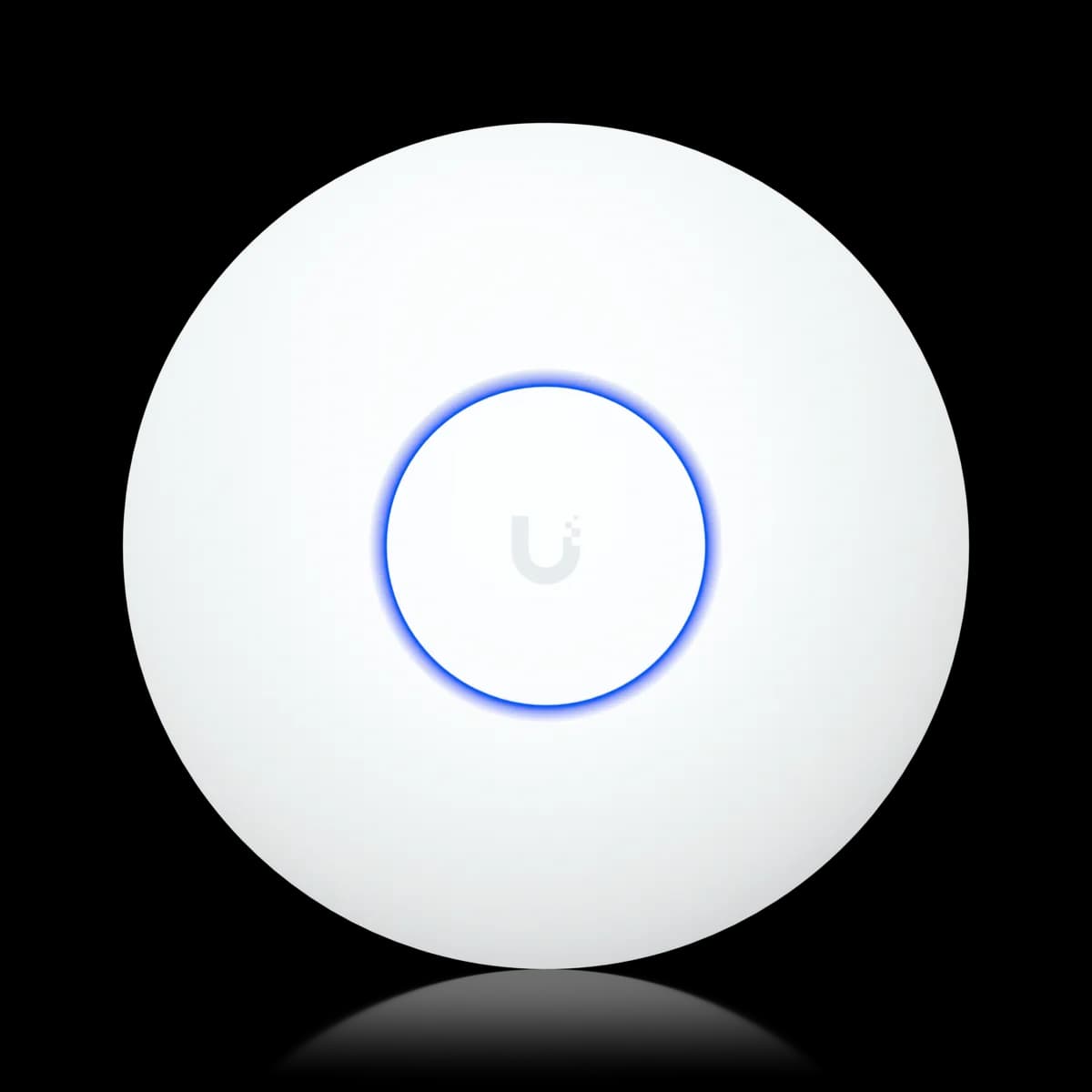
Which covers more and carries more clients? The U6 Pro. It is rated for 140 m² (1,500 ft²) and 250+ clients with a 4×4 5 GHz radio and six spatial streams in total. The U7 Lite is rated for 115 m² (1,250 ft²) and 200+ clients with 2×2 on both bands — four streams. (U6 Pro specs)

Here the U6 Pro makes its case. Four 5 GHz streams give the U6 Pro headroom for MU-MIMO, and its beamforming has more antennas to work with at range. Ubiquiti rates it for 140 m² and 250+ clients against the U7 Lite's 115 m² and 200+. In a living room with a dozen devices the difference is invisible. On a 30-desk co-working floor, four streams let the AP transmit to two 2×2 clients at once, where a 2×2 radio serves them in turn.

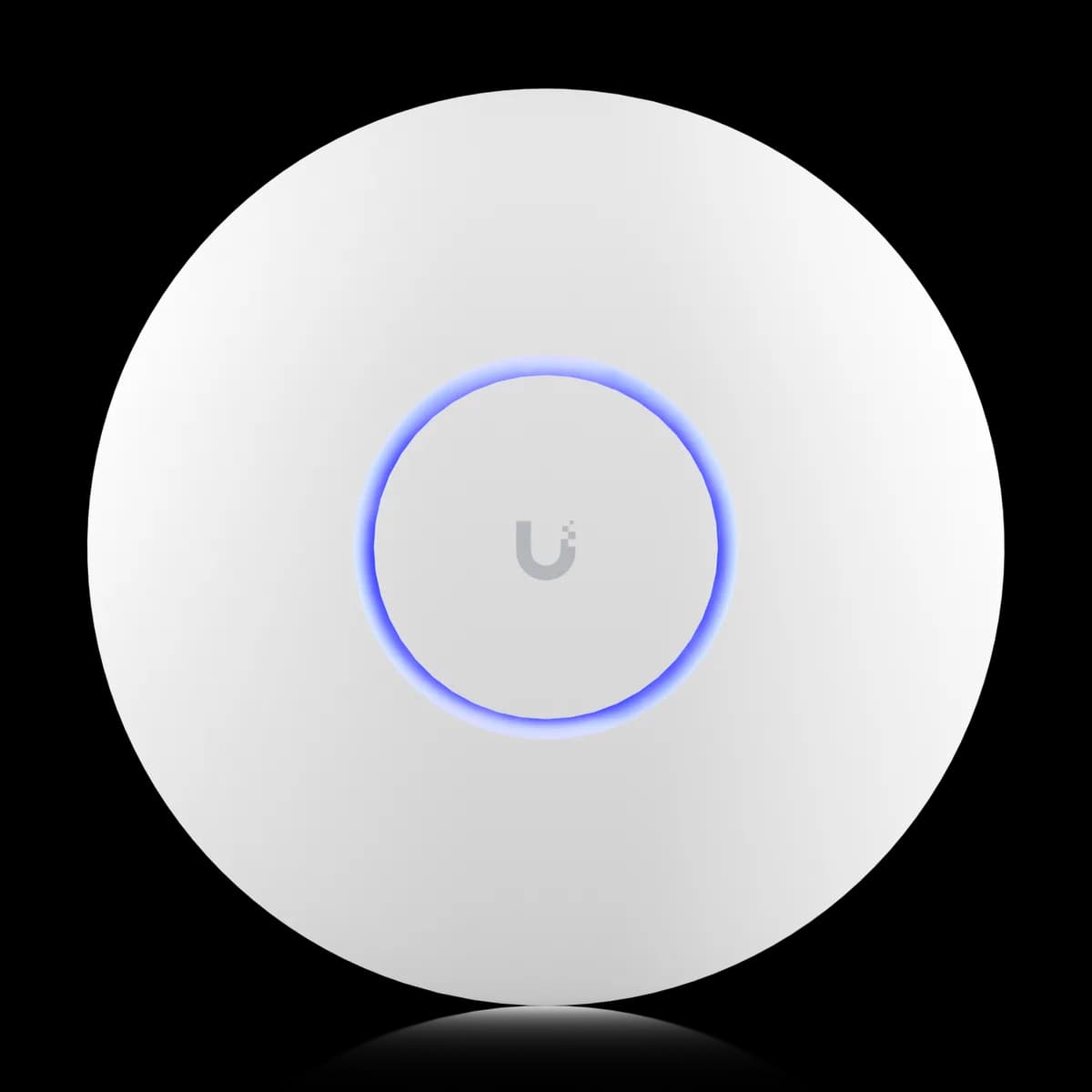
The U7 Lite is the smaller unit in every sense: a 2×2 radio in a ⌀171.5 mm, 313 g housing against the U6 Pro's ⌀197 mm and 580 g, rated for 115 m² to the U6 Pro's 140 m². Its 2.4 GHz radio lists a higher rate (688 Mbps against 573.5 Mbps), though only a 2×2 Wi-Fi 7 client on a 40 MHz channel would see it. Smart-home devices connect at 802.11n rates on either AP. A 200+ client rating is plenty for a home. U6 Pro vs U7 Pro weighs the same 4×4-versus-2×2 trade one tier up, and U6 Lite vs U6 Pro covers the older 2×2 model.

Does it need PoE+? No. Both run on standard 802.3af PoE at 13 W. The port is where they split: the U7 Lite has a 2.5 GbE uplink, the U6 Pro a 1 GbE port that caps its 4.8 Gbps radio at gigabit speed on the wire. (U7 Lite specs)

Power is a tie. No earlier Wi-Fi 7 UniFi AP ran on standard 802.3af (the U7 Pro and Pro Max need PoE+, the E7 PoE++). The U7 Lite runs on the same 802.3af budget as the U6 Pro, so an entry-level PoE switch or an existing injector powers either without a rethink. If you are adding several APs, PoE budget planning shows how 13 W units add up against a switch's total.

The uplink is the U7 Lite's clearest advantage. With a 1 GbE port, the U6 Pro's 4×4 radio can never move more than about a gigabit onto the wire, however fast the air link. The U7 Lite's 2.5 GbE port lifts that ceiling, provided the switch port on the other end is also 2.5 GbE, such as one on the USW Flex 2.5G 8 PoE. How to choose a UniFi switch covers when multi-gig ports are worth paying for. That said, on a gigabit switch the two APs are wire-limited alike.

When the U6 Pro Still Wins

When does the older AP win? When the room is dense. If one AP must serve dozens of active clients — an office floor, a classroom, a busy rental — the U6 Pro's 4×4 5 GHz radio and 250+ client rating beat the U7 Lite's 2×2 radio and 200+ rating. (U6 Pro specs)

Specialized is a better word for the U6 Pro than obsolete. Its four 5 GHz streams are what a crowded space needs, and where the clients are mostly Wi-Fi 6 or older (still the norm in laptop fleets bought before 2024), they gain nothing from the U7 Lite's Wi-Fi 7 modulation. A hotel conference room or an open office full of laptops and phones is still a U6 Pro room. With more budget the room belongs to the U7 Pro Max, which pairs a 4×4 5 GHz radio with a 6 GHz band and a 500+ client rating.

Coverage per AP is the second case. If a single ceiling unit has to reach the far bedroom, the U6 Pro's 140 m² rating buys margin the 115 m² U7 Lite lacks. The dual-band U7 Long-Range covers 160 m² for the same $159, however, and is the more current answer to that problem. U7 Lite vs U7 Long-Range works through it.

Who Should Buy Which

Start from the U7 Lite and look for a reason to leave it. With $60 in the U7 Lite's favor and identical PoE requirements, the U6 Pro has to justify itself on density or reach alone, and in a typical home it cannot.

Buy the U7 Lite if:

  • You are covering a home, apartment, or small office. Two streams and a 200+ client rating are more than a household uses, the 115 m² rating suits an apartment or a single floor, and you save $60.
  • Your switch has 2.5 GbE ports, or will. The U7 Lite's uplink only turns into real throughput behind a 2.5 GbE port, while the U6 Pro is stuck at 1 GbE forever. If you lack one, the USW Flex 2.5G 8 PoE lists at $199 before its power adapter.
  • You own or plan to buy Wi-Fi 7 clients. Multi-link operation and 4K-QAM only work with such clients, and only the U7 Lite offers either. The 240 MHz channel mode also needs DFS spectrum and a client that can use it on 5 GHz, which few phones can.
  • You are adding secondary APs. At $99 on 802.3af, it is the natural fill-in unit around a U7 Pro or U7 Pro Max, and $60 less per unit than filling in with U6 Pros.

Buy the U6 Pro if:

  • One AP must serve a dense room. Four 5 GHz streams handle a lecture room, or a café with a public SSID, where clients would queue on a 2×2 radio.
  • You need the extra reach from a single unit. 140 m² against 115 m² is a bedroom's worth of margin, although the 160 m² U7 Long-Range costs the same $159 if reach is the only gap.
  • The room is busy and every client is Wi-Fi 6 or older. The U7 Lite's generation advantage sits idle there, while the U6 Pro's 4×4 radio keeps working.

Still weighing the range? Start with how to choose a UniFi access point, see what the 6 GHz band adds in U7 Lite vs U7 Pro, or browse the Access Points hub.

Frequently Asked Questions

For most homes and small offices, yes: the U7 Lite is $60 cheaper ($99 vs $159), runs on the same 802.3af PoE at 13 W, and adds a 2.5 GbE uplink and Wi-Fi 7 features. The U6 Pro is better only where a single AP must serve a dense room, where its 4×4 5 GHz radio and 250+ client rating beat the U7 Lite's 2×2 radio and 200+ rating.

No. The U7 Lite is dual-band Wi-Fi 7, with 2.4 GHz and 5 GHz radios only — the same two bands as the U6 Pro. Its Wi-Fi 7 features (240 MHz channels, 4K-QAM, multi-link operation, preamble puncturing) apply to those bands. The 6 GHz band starts at the U7 Pro in the UniFi lineup.

No. Both draw a maximum of 13 W and run on standard 802.3af PoE, so any 802.3af port, whether on a current UniFi PoE switch or a standard 802.3af injector, powers either. That separates the U7 Lite from the U7 Pro, U7 Pro XG, and U7 Pro Max, which all require 802.3at (PoE+).

On paper the U6 Pro lists a higher 5 GHz rate — 4.8 Gbps (BW160, 4×4) against the U7 Lite's 4.3 Gbps (BW240, 2×2) — while the U7 Lite lists faster 2.4 GHz (688 Mbps vs 573.5 Mbps). On the wire the U7 Lite wins: its 2.5 GbE uplink can carry more than the U6 Pro's 1 GbE port, provided the switch port is also 2.5 GbE. A single two-stream Wi-Fi 6 client holds the same air link on either.

Yes, as long as the room is not dense. The U7 Lite uses the same 802.3af PoE and manages under the same UniFi Network controller, so it is a drop-in swap on the wire; it ships with its own mount. You lose the 4×4 5 GHz radio and about 25 m² of rated coverage, and gain a 2.5 GbE uplink and Wi-Fi 7 client features. For a crowded room, keep the U6 Pro or step up to the U7 Pro Max.