Comparison

UniFi Cloud Gateway Max vs Fiber: Same $279

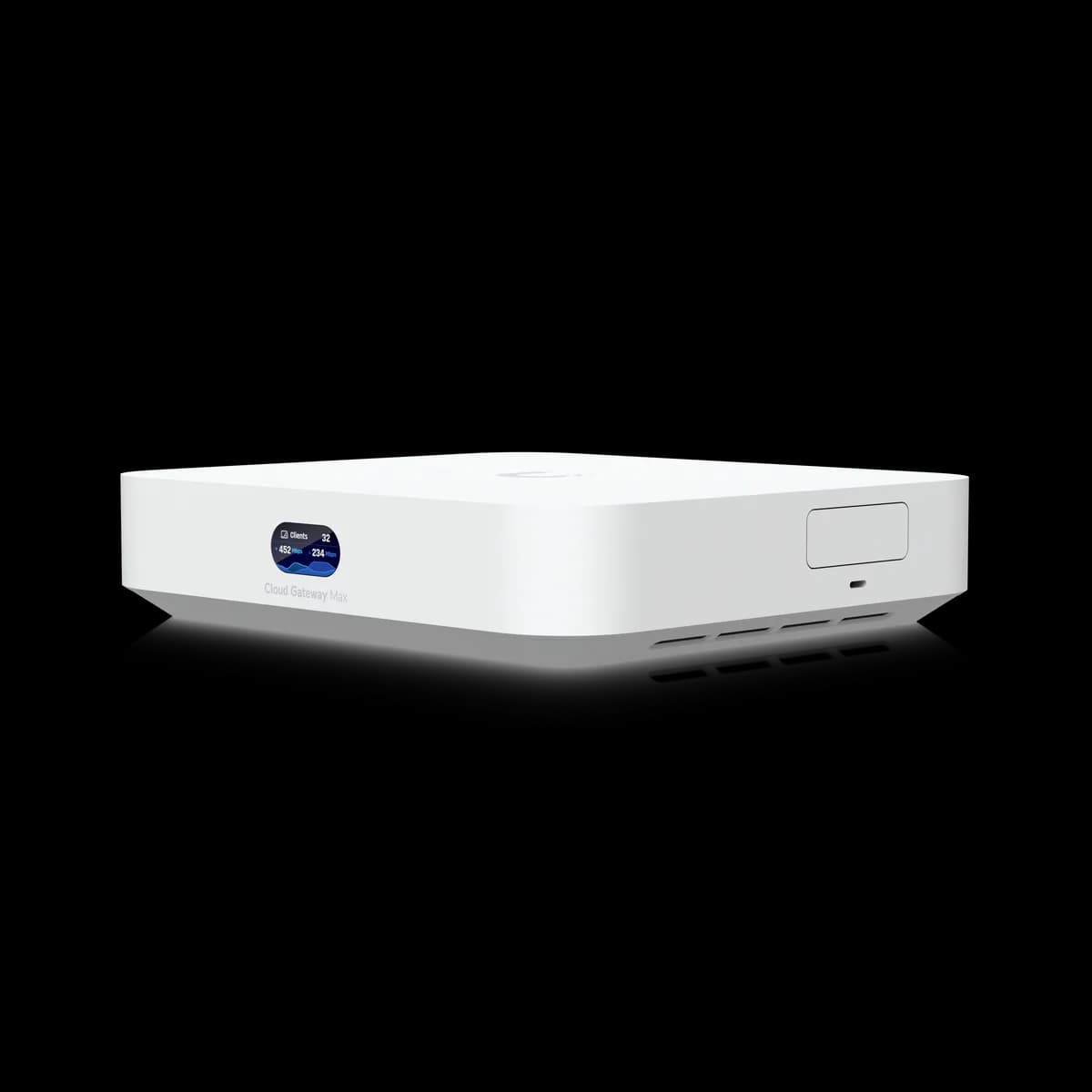
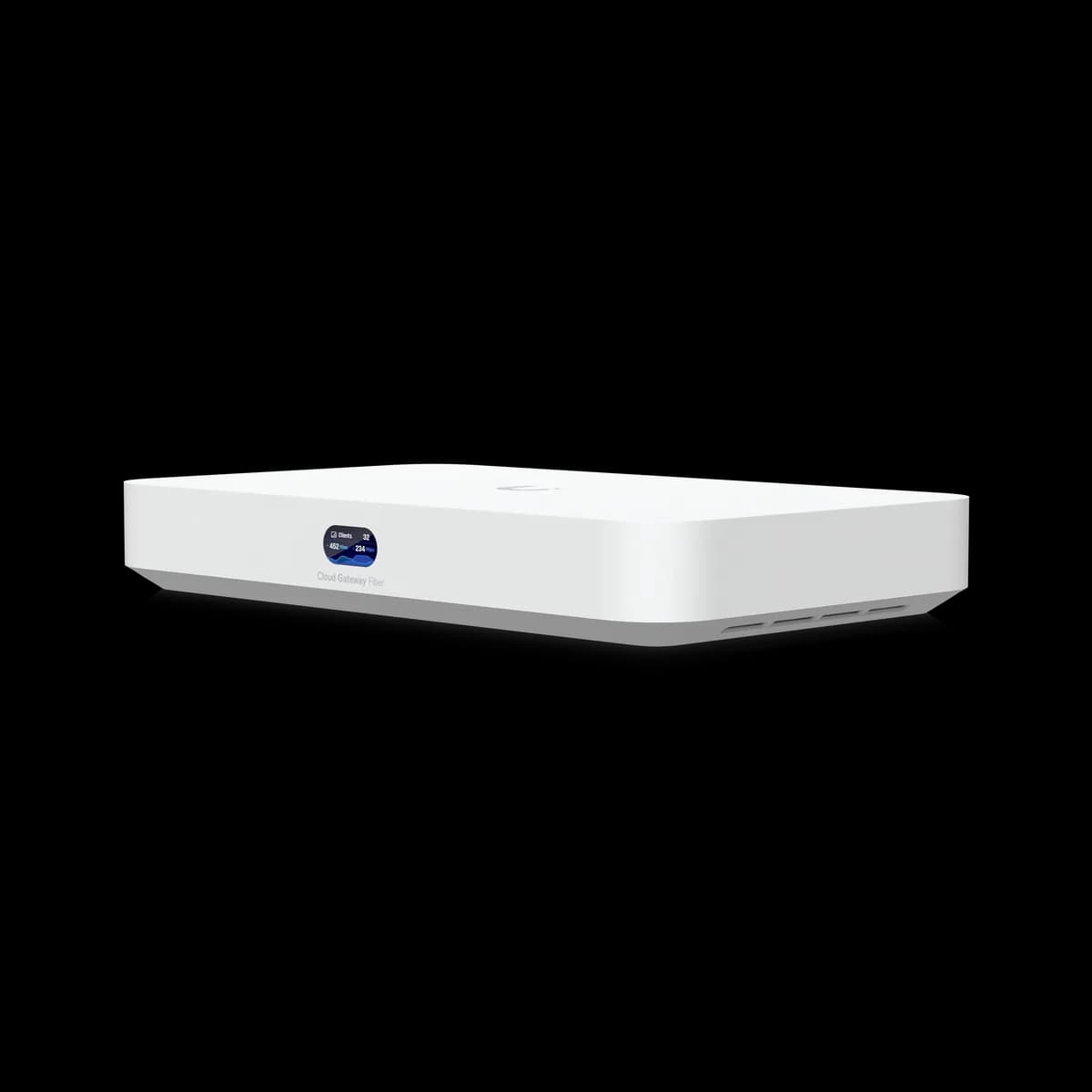
Two UniFi desktop gateways at $279. The Cloud Gateway Max puts every port at 2.5 GbE; the Cloud Gateway Fiber spends the money on 5 Gbps of IPS, 10G, and PoE.

Should I buy the UniFi Cloud Gateway Max or the Cloud Gateway Fiber?

Both list at $279 and they spend it differently. The Cloud Gateway Max gives you five 2.5 GbE ports, 2.3 Gbps of IDS/IPS, and 16.1 W of draw in a small fanless box. The Cloud Gateway Fiber trades two of those 2.5 GbE ports for a 10 GbE RJ45 and two 10G SFP+, more than doubles IPS to 5 Gbps on a faster processor, and adds a 30 W PoE budget — in a wider case drawing 29.4 W. Buy the Fiber for a multi-gig or fibre line. Buy the Max for a 2.5 GbE network that wants every port the same speed.

Spec Comparison

SpecUniFi Cloud Gateway MaxUniFi Cloud Gateway Fiber
ProcessorQuad-core ARM Cortex-A53 @ 1.5 GHzQuad-core ARM Cortex-A73 @ 2.2 GHz
System Memory3 GB3 GB
Protect StorageSelectable NVMe SSD up to 2 TBSelectable NVMe SSD up to 2 TB
WAN Port(1) 2.5 GbE RJ45 (default)(1) 10G SFP+ + (1) 10 GbE RJ45 (default)
LAN Ports(5) 2.5 GbE RJ45 total, one used as WAN(4) 2.5 GbE RJ45 + (1) 10 GbE RJ45 + (2) 10G SFP+ total
IDS/IPS Throughput2.3 Gbps5 Gbps
Form FactorCompact desktopCompact desktop
Max UniFi Devices30+50+
Max Clients300+500+
Protect Cameras(15) HD, (8) 2K, (5) 4K(15) HD, (8) 2K, (5) 4K
Dimensions141.8 × 127.6 × 30 mm212.8 × 127.6 × 30 mm
Weight460 g (519 g with SSD)675 g (734 g with SSD)
Operating Temp-10 to 40 °C0 to 40 °C
Max Power Draw16.1 W29.4 W (excl. PoE output)
PoE Output30 W total budget

Pricing & Positioning

Why the same price? Ubiquiti lists both the Cloud Gateway Max and the Cloud Gateway Fiber at $279, because they answer different questions. The Max is a uniform 2.5 GbE box. The Fiber is a 10G box with a faster processor and PoE. (Cloud Gateway Fiber specs)

Three of the eight gateways this site tracks list at $279. The third is the Wi-Fi 7 Dream Router 7; between these two the money buys shape rather than tier — what the ports are, how fast traffic can be inspected, and whether anything gets powered over Ethernet.

Both sit above the Cloud Gateway Ultra at $129 and below the rack units. Both take an NVMe SSD up to 2 TB, so either can record UniFi Protect cameras without a second box, and Ubiquiti's store notes that adding a drive to the Fiber later also requires its M.2 SSD tray. How to choose a UniFi gateway places them among the rest, and the Gateways hub lists all eight.

Inspection & Capacity: 2.3 Gbps Against 5

Which inspects faster? The Cloud Gateway Fiber, by more than double. Ubiquiti rates it at 5 Gbps of IDS/IPS against the Cloud Gateway Max's 2.3 Gbps, and gives it a quad-core A73 at 2.2 GHz where the Max runs an A53 at 1.5 GHz. (Cloud Gateway Max specs)

IDS/IPS throughput is the figure that caps a gateway once threat inspection is switched on, and it is where these two separate most. A 2 Gbps fibre plan sits inside the Max's rating with little to spare. The same plan leaves the Fiber more than half its headroom unused.

Ubiquiti also rates the Fiber higher on capacity: 50+ UniFi devices and 500+ clients against the Max's 30+ and 300+. Both carry 3 GB of memory, so these two differ on processor and rated capacity rather than on memory.

Below about a gigabit, neither ceiling is reachable and the choice falls to the ports. UniFi uplinks and aggregation covers what the WAN side can actually deliver.

Ports: Uniform 2.5 GbE or 10G

How do the ports differ? The Cloud Gateway Max carries five 2.5 GbE RJ45 ports, one used as WAN. The Cloud Gateway Fiber carries four 2.5 GbE RJ45, one 10 GbE RJ45, and two 10G SFP+, with the 10 GbE and an SFP+ as its default WAN. (Cloud Gateway Fiber specs)

The Max's appeal is that nothing on it is slower than anything else. Five ports, one speed, no port that quietly becomes the bottleneck when a switch or a NAS moves onto it.

The Fiber answers a different building, and its port list says so: a 10 GbE RJ45 that takes a multi-gig ONT or modem directly, and two SFP+ cages for fibre transceivers or a 10G link to a switch. That is three ports faster than anything on the Max, and it is the whole reason to prefer it.

What the Fiber gives up is uniformity: four of its RJ45 ports are 2.5 GbE, one fewer than the Max has. If every device on the network is 2.5 GbE, the Max spends the $279 more evenly.

PoE: 30 W on the Fiber, None on the Max

Can either power a device? Only the Cloud Gateway Fiber, which lists a 30 W PoE budget. The Cloud Gateway Max publishes no PoE output at all, so every powered device behind it needs a PoE switch or an injector. (Cloud Gateway Fiber specs)

Thirty watts is realistically one device: a U7 Pro draws up to 21 W and a G6 Bullet 9.9 W, so the Fiber can carry an access point or a camera, but not a run of them. PoE budget planning works through the arithmetic for a larger set.

That single port still changes a small install, because a one-camera doorway or a single ceiling AP becomes a cable and nothing else — no injector, no second box on the shelf. Behind the Max, the same camera means buying a PoE switch first.

Size, Draw & Operating Range

Bigger and hungrier? Yes, on both counts. The Cloud Gateway Fiber measures 212.8 × 127.6 × 30 mm and draws up to 29.4 W excluding PoE, against 141.8 × 127.6 × 30 mm and 16.1 W for the Cloud Gateway Max. (Cloud Gateway Max specs)

The Fiber is 71 mm wider and, without an SSD fitted, 215 g heavier at 675 g against 460 g. On an open shelf that is unremarkable, but in a media cabinet measured to the centimetre it is worth checking before the order goes in.

Power follows the same line: the Max runs from USB-C at 5V/5A, where the Fiber needs its 54V DC jack, which is also what feeds its PoE port. One is a phone charger's form of power, the other is a brick.

One rating differs in a way that decides some installs outright. Ubiquiti rates the Max from -10 °C and the Fiber from 0 °C. For a garage, an outbuilding, or an unheated cupboard in a cold climate, that ten degrees is the spec to read first.

Who Should Buy Which

Same money, so this is a question about the line coming in and the devices going out.

Buy the Cloud Gateway Fiber if:

  • Your internet is faster than 2.5 Gbps, or will be. The 10 GbE RJ45 and two SFP+ ports are the point, and 5 Gbps of IPS keeps inspection on at that speed.
  • You have fibre to the box. SFP+ takes a transceiver directly, with no media converter in the path.
  • One camera or access point needs power. The 30 W budget saves a switch purchase.
  • The device count is growing. Ubiquiti rates the Fiber for 50+ UniFi devices and 500+ clients, against the Max's 30+ and 300+.

Buy the Cloud Gateway Max if:

  • Everything on your network is 2.5 GbE. Five ports at one speed, and 2.3 Gbps of IPS is more than a 2 Gbps line needs.
  • Space or power is tight. It is 71 mm narrower, draws 16.1 W, and runs from USB-C.
  • It will sit somewhere cold. Rated from -10 °C against the Fiber's 0 °C.

Still deciding at the entry end? Cloud Gateway Ultra vs Cloud Gateway Max covers the step below, and Cloud Gateway Fiber vs UDM-Pro asks whether this belongs in a rack instead.

Frequently Asked Questions

Yes. Ubiquiti lists both at $279 on the US store. The Cloud Gateway Fiber spends that on 5 Gbps of IDS/IPS, a 10 GbE RJ45, two 10G SFP+ ports, and a 30 W PoE budget. The Cloud Gateway Max spends it on five uniform 2.5 GbE ports, a smaller case, and a 16.1 W draw.

The Cloud Gateway Fiber, rated at 5 Gbps. That matches the $599 Dream Machine Pro Max and is above the $379 UDM-Pro's 3.5 Gbps. Of the eight gateways this site tracks, only those two reach 5 Gbps.

No. Ubiquiti publishes no PoE output for the Cloud Gateway Max, so cameras and access points behind it need a PoE switch or an injector. The Cloud Gateway Fiber lists a 30 W PoE budget, which covers a single camera or access point.

Both take a selectable NVMe SSD up to 2 TB, and Ubiquiti rates each for 15 HD, 8 2K, or 5 4K cameras. The drive is a separate purchase on either one. The Cloud Gateway Ultra, by contrast, has no Protect storage at all.

It is 212.8 mm wide against 141.8 mm, the same 127.6 mm deep and 30 mm tall, and 675 g against 460 g before an SSD is fitted. It also draws 29.4 W excluding PoE against 16.1 W, and runs from a 54V DC jack rather than USB-C.