Comparison

UniFi U7 Pro vs U7 Pro Max: Is 4×4 Worth $90?

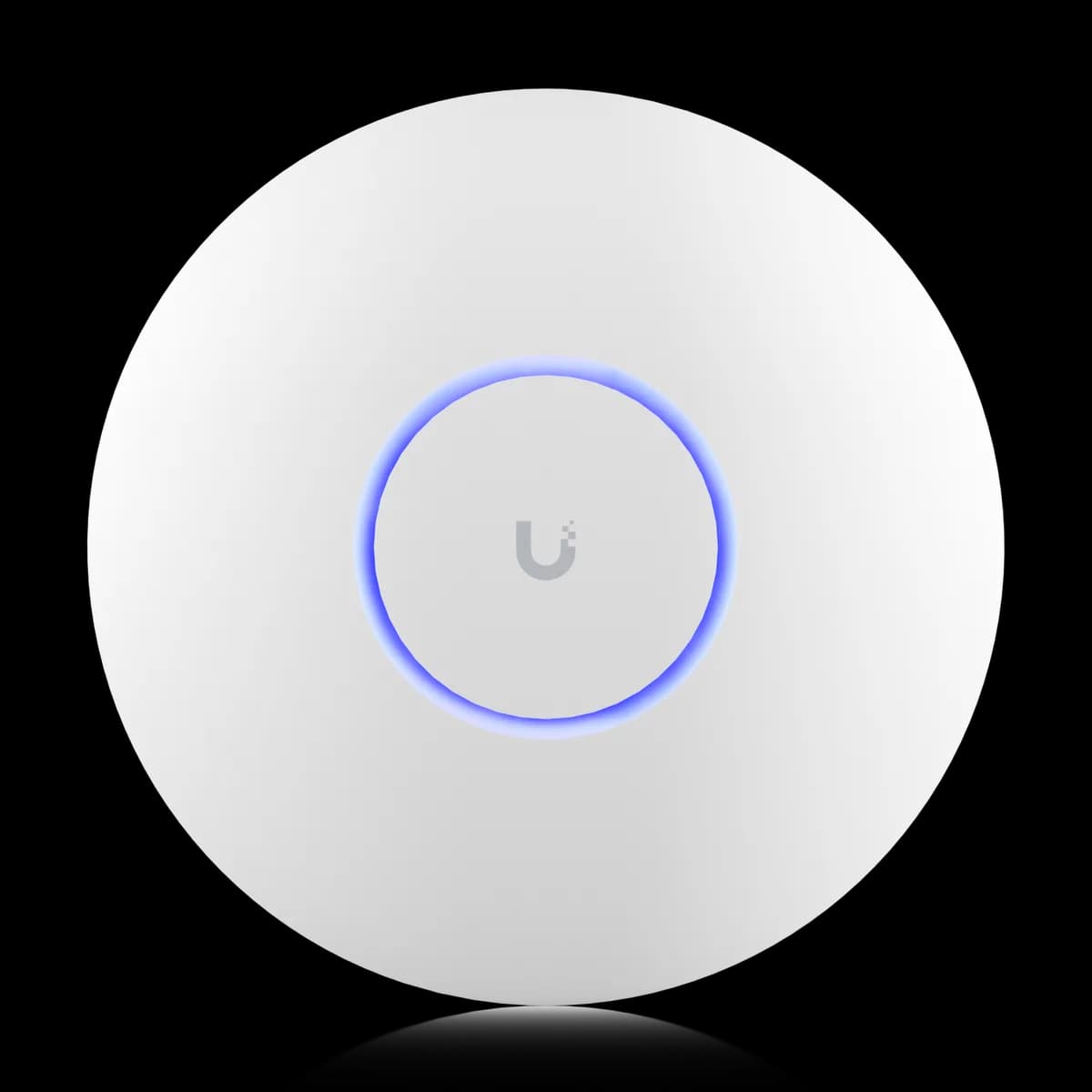
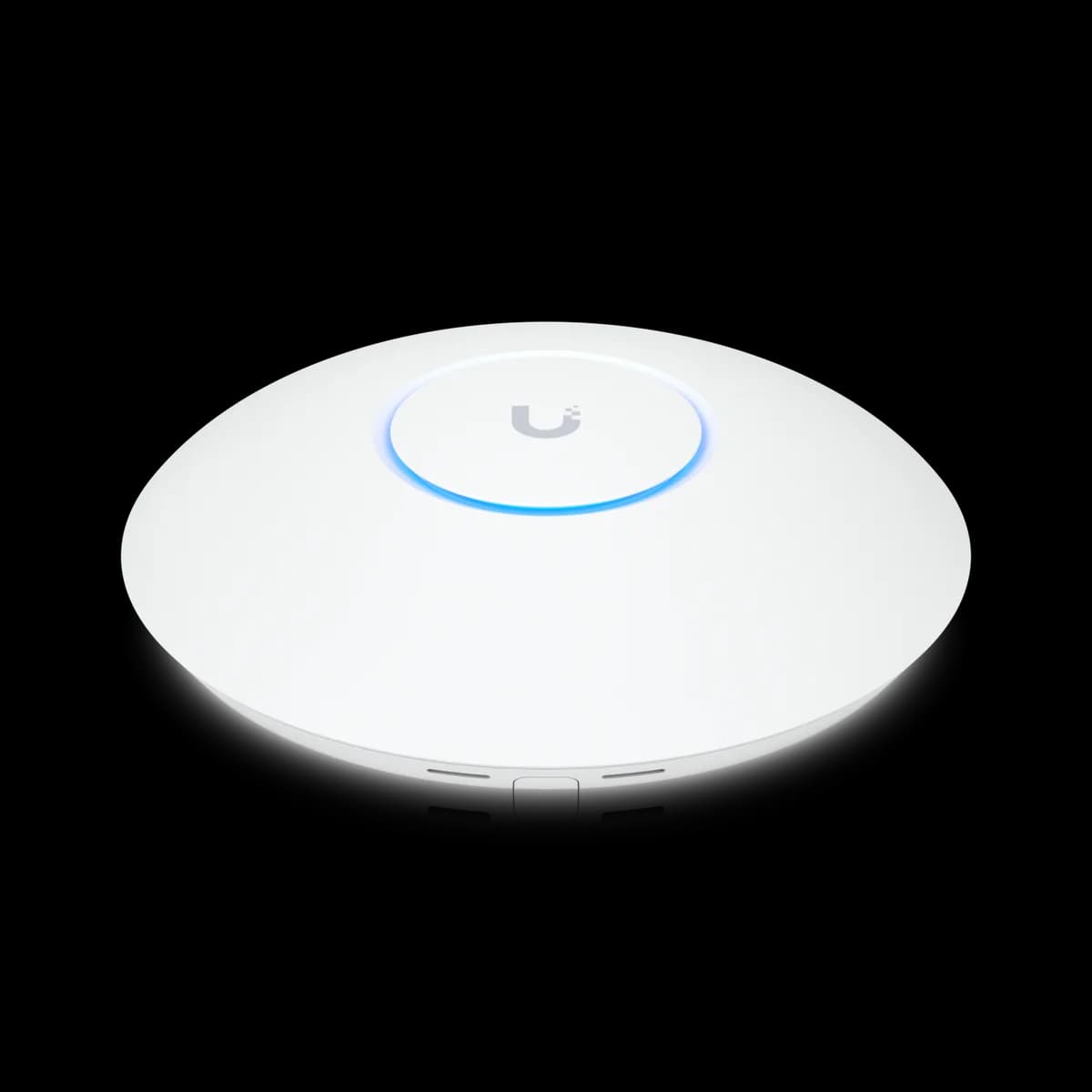
The $189 U7 Pro (six streams, 2×2, 300+ clients, 140 m²) vs the $279 U7 Pro Max (eight streams, 4×4 on 5 GHz, 500+, 160 m²): both tri-band Wi-Fi 7 on PoE+.

Should I buy the UniFi U7 Pro or the U7 Pro Max?

The $90 between the U7 Pro ($189) and the U7 Pro Max ($279) buys density, not a new band. Both are tri-band Wi-Fi 7: a 6 GHz radio at 5.8 Gbps (BW320), a 2.5 GbE uplink, PoE+. The U7 Pro Max doubles the 5 GHz radio to 4×4 at 8.6 Gbps (BW240), lifts the client rating from 300+ to 500+ and rated coverage from 140 m² to 160 m², and adds real-time spectral analysis, at 25 W against 21 W. Buy the U7 Pro Max if one AP must serve a crowded space. Buy the U7 Pro for a home or small office, where the $90 goes toward a second AP instead.

Spec Comparison

SpecUniFi U7 ProUniFi U7 Pro Max
Wi-Fi StandardWi-Fi 7 (802.11be)Wi-Fi 7 (802.11be)
BandsTri-band (2.4 + 5 + 6 GHz)Tri-band (2.4 + 5 + 6 GHz)
6 GHz Rate5.8 Gbps (BW320)5.8 Gbps (BW320)
5 GHz Rate4.3 Gbps (BW240)8.6 Gbps (BW240)
2.4 GHz Rate688 Mbps (BW40)688 Mbps (BW40)
Spatial Streams68
5 GHz MIMO2×24×4
Uplink Port(1) 1/2.5 GbE RJ45(1) 1/2.5 GbE RJ45
Power MethodPoE+PoE+
Max Power Draw21 W25 W
Max Clients300+500+
Coverage Area140 m² (1,500 ft²)160 m² (1,750 ft²)
Dimensions⌀206 × 46 mm⌀206 × 46 mm
Weight680 g680 g
Max TX Power6 GHz 23 dBm · 5 GHz 26 dBm · 2.4 GHz 23 dBm6 GHz 23 dBm · 5 GHz 29 dBm · 2.4 GHz 23 dBm
5 GHz Antenna Gain6 dBi6 dBi
6 GHz Antenna Gain5.8 dBi5.9 dBi
Operating Temp-30 to 40 °C (-22 to 104 °F)-30 to 50 °C (-22 to 122 °F)
Real-Time Spectral AnalysisYes

Pricing & Positioning

What does the $90 buy? The U7 Pro lists at $189, the U7 Pro Max at $279. The extra buys a 4×4 5 GHz radio at 8.6 Gbps (BW240) instead of 2×2 at 4.3 Gbps, eight streams against six, 500+ clients against 300+, and 160 m² against 140 m². The 6 GHz and 2.4 GHz data rates match. (U7 Pro Max specs)

These are the two tri-band Wi-Fi 7 APs most UniFi buyers actually weigh. The U7 Pro launched in January 2024 as the affordable Wi-Fi 7 default; the U7 Pro Max followed in mid-2024 as the high-density version, taking the 5 GHz radio to four streams. Nothing about the Max is a different generation. It is the Pro with twice the 5 GHz streams, a higher client and coverage rating, real-time spectral analysis, and four more watts of draw.

The $90 gap is the question, and the answer depends on how many devices one AP has to carry. For the rest of the range, how to choose a UniFi access point sets out the ladder and the Access Points hub lists all nine. The dual-band U7 Lite and U7 Long-Range sit below this pair, and the 10 GbE U7 Pro XG and U7 Pro XGS sit alongside.

The 4×4 5 GHz Radio: What Eight Streams Do

What do the extra streams do? The U7 Pro Max's 4×4 5 GHz radio serves two 2-stream clients at once through MU-MIMO where the U7 Pro's 2×2 serves one, and steers signal with four antennas. The 8.6 Gbps rating is the radio's total — a two-stream phone links at the same rate on either AP. (U7 Pro Max specs)

Streams are capacity, not speed, for almost every client. Phones and laptops carry two streams, so a single device sees the same 5 GHz link on the U7 Pro as on the U7 Pro Max. Four streams change what happens when twenty of those devices are active at once. The U7 Pro Max can pair them up on the air, serve more of them per transmit opportunity, and steer signal more precisely to each. Ubiquiti rates it for 500+ clients against the U7 Pro's 300+.

The 6 GHz band, by contrast, is rated identically — 2×2 at 5.8 Gbps (BW320) on both — so Wi-Fi 6E and Wi-Fi 7 clients that sit on 6 GHz gain nothing from the Max. That matters: a recent fleet has 6 GHz to use, which leaves 5 GHz to Wi-Fi 6 and older devices — and those are the devices the Max's wider radio helps most. Wi-Fi 7 and MLO explained covers how multi-link operation uses those bands.

Does the Max get a faster port? No. Both the U7 Pro and the U7 Pro Max uplink over one 1/2.5 GbE port, so the Max's 8.6 Gbps 5 GHz radio and 5.8 Gbps 6 GHz radio sit behind the same 2.5 GbE wire as the Pro's. For 10 GbE, see the U7 Pro XG or U7 Pro XGS. (U7 Pro specs)

This is the Pro Max's real limit. Adding streams raises what the AP can move over the air, but everything still funnels through one 2.5 GbE port. The U7 Pro Max's aggregate wireless capacity therefore exceeds its wired capacity by a wider margin than the U7 Pro's does. After all, the port's job in a dense room is to carry many modest flows, not one huge one. For a single client trying to move more than 2.5 Gbps, neither AP helps.

If both density and a 10 GbE uplink matter, the U7 Pro XGS is the U7 Pro Max's radio with the XG's port for $20 more. U7 Pro Max vs U7 Pro XGS weighs that step, including its PoE++ requirement. For the plain port question at the six-stream tier, U7 Pro vs U7 Pro XG is the $10 version. Either way the switch behind the AP has to match the AP: 2.5 GbE PoE+ ports for the U7 Pro and U7 Pro Max, and 10 GbE ports with PoE+ or PoE++ for the two XG models.

PoE, Coverage & Size

What about power and reach? Both need PoE+ (802.3at): the U7 Pro draws up to 21 W, the U7 Pro Max up to 25 W. The Max is rated for 160 m² against 140 m², transmits at up to 29 dBm on 5 GHz, and shares the Pro's ⌀206 × 46 mm, 680 g housing, rated to 50 °C (Pro: 40 °C). (U7 Pro Max specs)

Power stays in the PoE+ class, so a switch port that runs a U7 Pro runs a U7 Pro Max. The four extra watts only matter when a full switch budget is being counted, which PoE budget planning works through. Neither needs 802.3af flexibility or 802.3bt headroom — that is the U7 Lite at one end and the U7 Pro XGS at the other.

Ubiquiti rates the U7 Pro Max for 20 m² more coverage. It has four 5 GHz antennas and transmits at up to 29 dBm on that band against the U7 Pro's 26 dBm, while the 6 GHz radios are rated the same, within 0.1 dBi of antenna gain. Its 50 °C rating is a practical bonus in a warm ceiling void or a loft. Ubiquiti also lists real-time spectral analysis on the U7 Pro Max and not on the U7 Pro, which matters where neighboring networks crowd the bands. Physically the two are the same disc, ⌀206 × 46 mm and 680 g, so nothing on the ceiling gives the upgrade away.

When the U7 Pro Is Enough

When is the Pro enough? Wherever one AP serves a few dozen devices or fewer — a home or a small office. Two streams per band cover that, the 6 GHz rating is identical, and the $90 saved goes toward a second AP — a U7 Lite is $99 — which adds more capacity than the U7 Pro Max's extra streams. (U7 Pro specs)

A second AP beats a bigger one for most homes. Two U7 Pros ($378) give two 6 GHz radios, two 5 GHz radios, and two locations for $99 more than one U7 Pro Max. Keep in mind that placement is what fixes the weak bedroom, and stream count does not. Wi-Fi roaming in UniFi explains how clients hand off between them.

Sometimes a second location is not the answer. A single large open room, a conference space, a classroom, a short-term rental full of guests' phones — the Max earns its price there. Four 5 GHz streams and a 500+ client rating do work that no amount of extra placement can, and the 160 m² reach helps one unit cover it all. If that room also needs a 10 GbE uplink, step to the U7 Pro XGS; if it needs reach without 6 GHz, the dual-band U7 Long-Range covers 160 m² on 802.3af for $159.

Who Should Buy Which

With identically rated 6 GHz radios and the same 2.5 GbE uplink, the $90 comes down to one question: how many devices does this one AP have to carry at once? Dozens, in one open space, is the Max. A household, or anything a second AP would fix, is the Pro.

Buy the U7 Pro Max if:

  • One AP serves a dense space. An open office, a classroom, or a venue floor uses the 4×4 5 GHz radio and the 500+ client rating.
  • Most of your clients are still on 5 GHz. Older devices are the ones the wider radio helps; 6 GHz clients see no difference.
  • You need 160 m² from one ceiling with 6 GHz included. The dual-band U7 Long-Range covers the same area without the third band.
  • The ceiling runs hot. Its 50 °C rating gives margin the Pro's 40 °C does not.
  • The spectrum is noisy. Real-time spectral analysis is on the U7 Pro Max's spec sheet and absent from the U7 Pro's.

Buy the U7 Pro if:

  • It is a home or small office. Two streams per band carry a household with room to spare.
  • You would rather have two APs than one big one. $378 for two Pros buys more coverage and capacity than $279 for one Max.
  • Your Wi-Fi 6E and Wi-Fi 7 clients will live on 6 GHz. That radio is rated the same on both, so the Max's advantage never reaches them.

Weighing the rest of the range? Start with how to choose a UniFi access point, see the 10 GbE options in U7 Pro vs U7 Pro XG, or browse the Access Points hub.

Frequently Asked Questions

The 5 GHz radio. The U7 Pro Max ($279) runs 4×4 on 5 GHz at 8.6 Gbps (BW240) with eight streams in total, a 500+ client rating, and 160 m² of rated coverage; the U7 Pro ($189) runs 2×2 at 4.3 Gbps with six streams, 300+ clients, and 140 m². Ubiquiti also lists real-time spectral analysis on the U7 Pro Max only. Both are tri-band Wi-Fi 7 with an identically rated 2×2 6 GHz radio at 5.8 Gbps (BW320), a 1/2.5 GbE uplink, and PoE+ (25 W vs 21 W).

For a single device, no — phones and laptops carry two streams and link at the same rate on either AP, and the 6 GHz radios are rated the same. The Pro Max is faster in aggregate: its 4×4 5 GHz radio serves two 2-stream clients at once and steers signal with four antennas, which keeps a crowded room moving. Both share the same 2.5 GbE uplink.

No. The U7 Pro Max draws up to 25 W and runs on PoE+ (802.3at), the same class as the U7 Pro at 21 W. Any PoE+ port that powers a U7 Pro powers a U7 Pro Max. Of the nine ceiling APs this site tracks, two require PoE++ (802.3bt): the U7 Pro XGS at 29 W and the E7 at 43 W.

No. Like the U7 Pro, it has a single 1/2.5 GbE RJ45 port. The U7 Pro XG (six streams, $199) and U7 Pro XGS (eight streams, $299) are the models with a 10 GbE uplink. The U7 Pro XGS is effectively a U7 Pro Max with the 10 GbE port and a PoE++ requirement.

Usually not. A household of a few dozen devices sits within the U7 Pro's two streams per band, and the 6 GHz radio is rated the same on both. The $90 difference goes most of the way toward a U7 Lite at $99, and a second AP in the right place adds more coverage and capacity than the Max's extra streams. The Max is for one AP serving a dense open space.