Comparison

UniFi G6 Dome vs G6 Turret: IK10 for $80?

Same 1/1.8-inch 4K sensor and 30 m IR. The $279 G6 Dome adds an IK10 vandal rating at 9.25 W; the $199 G6 Turret is IK04 but rated to -30 °C. Which to buy.

Should I buy the UniFi G6 Dome or the G6 Turret?

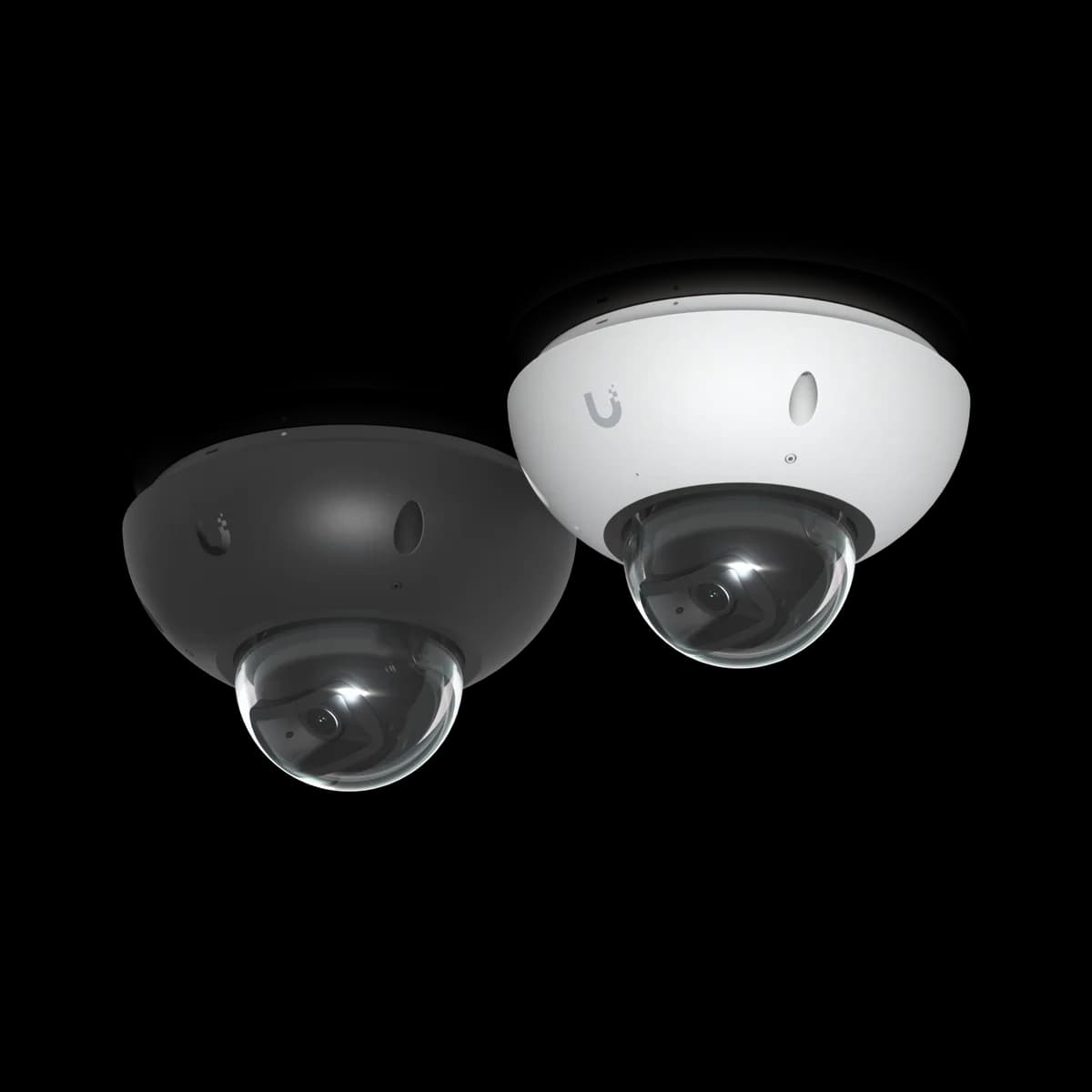
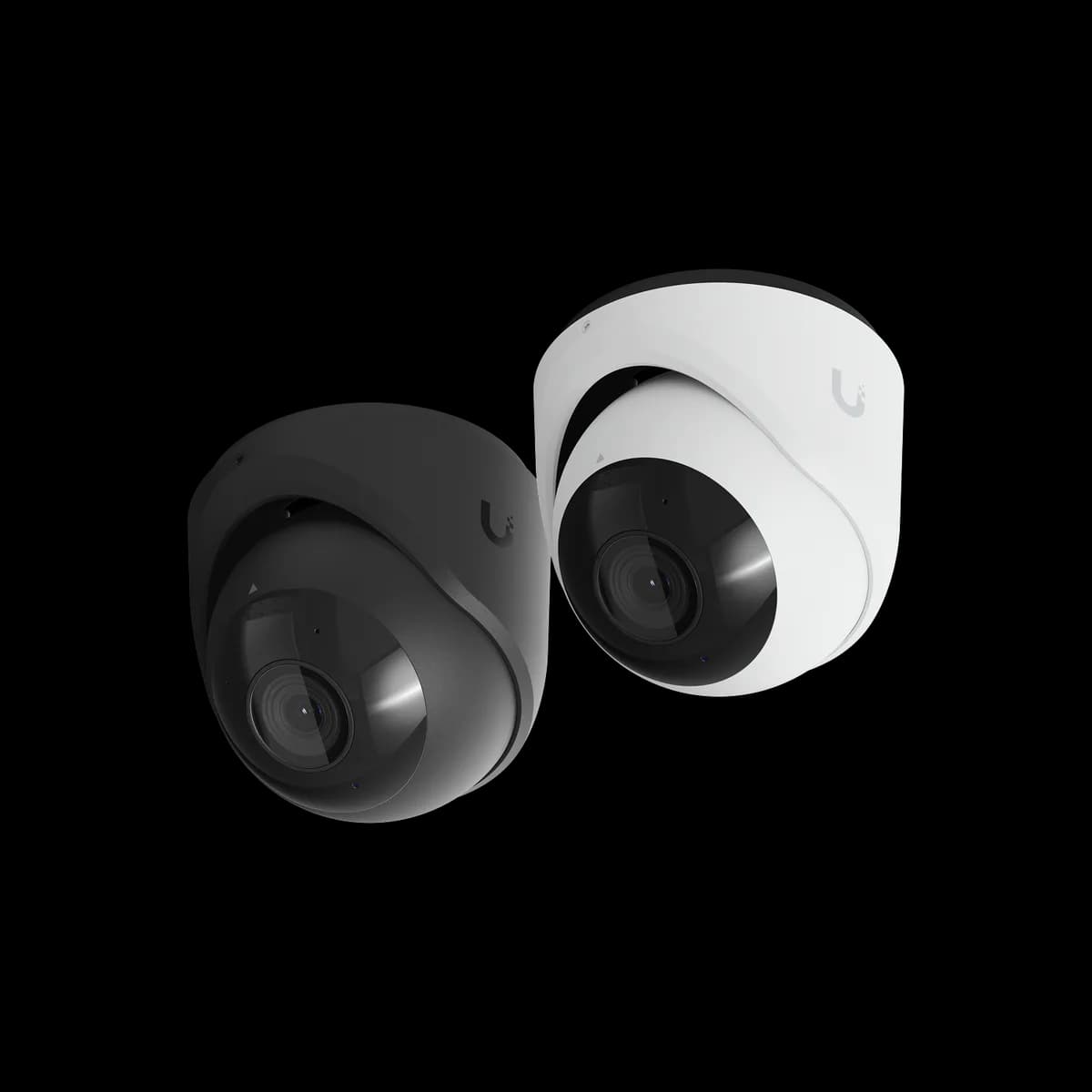
Buy the G6 Turret ($199) unless the camera can be reached, and the G6 Dome ($279) when it can. Both use the same 1/1.8-inch 8MP sensor, record 4K at 30 fps across a 109.9° view, reach 30 m with IR, run on plain PoE over a 10/100 port, and have a microphone but no onboard storage. The dome's extra $80 buys an IK10 vandal rating, against the turret's IK04, in a housing whose lens cannot be pushed off aim, and it draws slightly less power at 9.25 W against 12.5 W. The turret is rated to -30 °C, against -20 °C, and at 550 g is the lighter, smaller unit.

Spec Comparison

SpecUniFi Protect G6 DomeUniFi Protect G6 Turret
Form FactorOutdoor vandal domeOutdoor turret (eyeball)
Image Sensor1/1.8" 8MP1/1.8" 8MP
Max Resolution4K (3840 × 2160) at 30 fps4K (3864 × 2160) at 30 fps
Field of ViewH 109.9°H 109.9°
IR Night Vision30 m (98 ft)30 m (98 ft)
ConnectivityWired — 10/100 RJ45Wired — 10/100 RJ45
Power MethodPoEPoE
Max Power Draw9.25 W12.5 W
Weather / Vandal RatingIP66 / IK10IP66 / IK04
Operating Temp-20 to 50 °C (-4 to 122 °F)-30 to 50 °C (-22 to 122 °F)
AI DetectionsPerson, Vehicle, Animal + Face & License Plate (Multi-TOPS AI)Person, Vehicle, Animal + Face & License Plate (Multi-TOPS AI)
AudioMicrophoneMicrophone
Dimensions⌀144.7 × 96.3 mm⌀100 × 95 mm
Weight820 g550 g
MountingCeiling, wall (included); gang-box plate, dual mount, flush mount, weather shield (optional)Ceiling, wall (included); arm, pendant, junction box (optional)

Pricing & Positioning

What does the extra $80 buy? An IK10 vandal rating. The G6 Turret lists at $199 and the G6 Dome at $279, and both share a 1/1.8" 8MP sensor, a 109.9° view, 30 m IR, and plain PoE. The turret is IK04, rated to -30 °C; the dome is rated to -20 °C. (G6 Dome specs)

The G6 Turret launched with the first G6 wave in March 2025 and became the discreet half of the $199 pair. The G6 Dome followed in June 2025 with the G6 180 and G6 Pro 360, giving the same sensor a vandal-rated body. Nothing about the picture changes between them.

So the $80 is a payment for the housing alone, and the decision turns on a fact about the site rather than about the cameras. The sections below cover the rating, the climate trade that comes with it, and the practical differences in fitting each body. How to choose a UniFi Protect camera sets both in the full range, and the Security Cameras hub lists every model.

Vandal Resistance: IK10 vs IK04

Is the dome vandal-proof? It is rated IK10, a 20-joule impact rating, and IP66 for weather. The G6 Turret is IK04, a 0.5-joule rating, with the same IP66. Among the $199–$279 cameras tracked here, the G6 Dome is the only IK10 body. (G6 Dome specs)

An impact rating only matters where an impact is possible. Mounted three meters up under an eave, a turret is protected by height, and IK04 is ample for wind-blown debris and the occasional ball. Mounted at door height beside a shop entrance, in a stairwell, or on a car-park ceiling, it is within range of a deliberate blow. That is the position an IK10 dome is made for.

The dome protects its aim as well as its glass. A turret's eyeball rotates in its socket, which makes it easy to set up and equally easy for someone to push toward a wall. A dome's lens sits under a fixed cover, so redirecting it means opening the housing. For the same choice with optical zoom and a larger sensor, see G6 Pro Turret vs G6 Pro Dome.

Cold Rating: -20 °C vs -30 °C

Which handles cold better? The G6 Turret, rated from -30 to 50 °C (-22 to 122 °F). The G6 Dome is rated from -20 to 50 °C (-4 to 122 °F), the same floor as the G6 Bullet. Both are IP66, so rain and dust are not the difference. (G6 Turret specs)

This is the cost of the dome body, and it follows a pattern across the G6 range: the turrets carry the -30 °C rating, while the bullets and domes stop at -20 °C. In a temperate climate the line rarely comes into play. Where winter nights regularly fall below -20 °C, an outdoor dome is operating outside its rating and the turret is the documented choice.

Domes have one more outdoor habit worth knowing. A curved cover in front of the lens collects dust and water spots, and at night it can catch the camera's own IR. An exposed dome benefits from an occasional wipe and from the optional weather shield. A turret's recessed flat lens is less fussy. Indoors, where most domes live, neither point applies.

Power, Size & Mounting

Power and size? Both run on plain PoE. The G6 Dome draws up to 9.25 W, the lowest of the wired G6 cameras tracked here; the G6 Turret draws up to 12.5 W. The dome is larger and heavier at ⌀144.7 × 96.3 mm, 820 g, against ⌀100 × 95 mm, 550 g. (G6 Dome specs)

Neither camera needs PoE+, which keeps both on the ports of an entry-level PoE switch. The 3.25 W difference is small per camera but adds up across a corridor of domes, and PoE budget planning shows how to total a run. How to choose a UniFi switch covers port counts, PoE standards, and budgets across the four switches this site tracks.

The accessory lists point at different buildings. The dome takes a flush mount that sinks it into a suspended ceiling, a gang-box plate, a dual mount, and a weather shield, which is the kit for offices, clinics, and retail. The turret takes an arm, a pendant, and a junction box, the kit for eaves and exterior walls. At 820 g the dome also asks a little more of a ceiling tile than the 550 g turret.

What They Share

Same image? Yes, by the spec sheets. Both use a 1/1.8" 8MP sensor recording 4K at 30 fps through a fixed lens with a 109.9° horizontal view, with 30 m (98 ft) of IR. Both have a microphone, a 10/100 port, the same AI detections, and no onboard storage. (G6 Turret specs)

One oddity sits in the resolution row: Ubiquiti lists the G6 Turret at 3864 × 2160 and the G6 Dome at 3840 × 2160, a 24-pixel difference in width that no viewer would notice. Because neither has a card slot, both depend on a gateway or NVR running Protect for every frame they record. Plan that recorder first: Protect storage sizing covers how much disk a run of 4K cameras fills, and how to choose a UniFi gateway covers which gateways run Protect and what storage each carries.

Neither camera speaks. Each lists a microphone only, so two-way audio means stepping to a different body: the G6 Instant indoors, or a Pro Turret or Pro Bullet outdoors. If the missing piece is reach or low-light performance rather than audio, G6 Dome vs G6 Pro Dome weighs the step up within the dome body.

Who Should Buy Which

Stand where the camera will go and reach up. If a person, a ladder-free pole, or a thrown object could plausibly hit it, the dome is worth $80. If not, the turret is cheaper, lighter, and rated colder.

Buy the G6 Dome if:

  • The camera is within reach. Entrances, corridors, stairwells, and car-park ceilings are IK10 positions.
  • The aim must not be tampered with. The lens sits under a fixed cover.
  • It is going into a suspended ceiling. The flush mount is a dome accessory.
  • You are powering a long run. 9.25 W per camera stretches a PoE budget further.

Buy the G6 Turret if:

  • The camera sits high under an eave. Height protects it and IK04 is enough.
  • Winters fall below -20 °C. The turret is rated to -30 °C.
  • The surface is light. 550 g suits a soffit panel better than 820 g.
  • You would rather spend the $80 elsewhere. The picture specs match.

Choosing between the two $199 bodies instead? G6 Bullet vs G6 Turret covers that pair, and how to choose a UniFi Protect camera maps the full range.

Frequently Asked Questions

The housing. The G6 Dome ($279) is rated IK10 for impact, draws up to 9.25 W, weighs 820 g, and operates from -20 to 50 °C. The G6 Turret ($199) is rated IK04, draws up to 12.5 W, weighs 550 g, and operates from -30 to 50 °C. Both share a 1/1.8-inch 8MP sensor, 4K at 30 fps, a 109.9° view, 30 m of IR, plain PoE, a 10/100 port, a microphone, and no onboard storage.

Only where the camera can be reached or struck. The $80 buys an IK10 vandal rating and a lens that cannot be pushed off aim, not a better image. For a camera mounted high under an eave, the G6 Turret delivers the same picture for less, in a lighter body with a colder rating.

No. Ubiquiti lists the G6 Dome as PoE with a maximum draw of 9.25 W, the lowest of the wired G6 cameras tracked on this site. The G6 Turret is also plain PoE at 12.5 W. The G6 Pro models, the G6 180, the G6 Pro 360, and the G6 PTZ are the ones listed as PoE+.

Yes. It is rated IP66 and operates from -20 to 50 °C, and an optional weather shield is available. In climates that fall below -20 °C the G6 Turret, rated to -30 °C, is the better outdoor choice. An exposed dome cover also benefits from occasional cleaning.

No. Neither lists a microSD slot, so both need a UniFi gateway or NVR running Protect to record. Among the G6 cameras tracked here, onboard microSD is found on the G6 Instant, G6 PTZ, G6 180, G6 Pro 360, and the three G6 Pro models.