Comparison

UniFi Lite 16 PoE vs Flex 2.5G 8 PoE

Both the USW-Lite-16-PoE and USW-Flex-2.5G-8-PoE cost $199 but trade off opposite ways: 16 gigabit ports vs 8 multi-gig ports with 10G uplinks. Which to buy?

Should I buy the UniFi Lite 16 PoE or the Flex 2.5G 8 PoE?

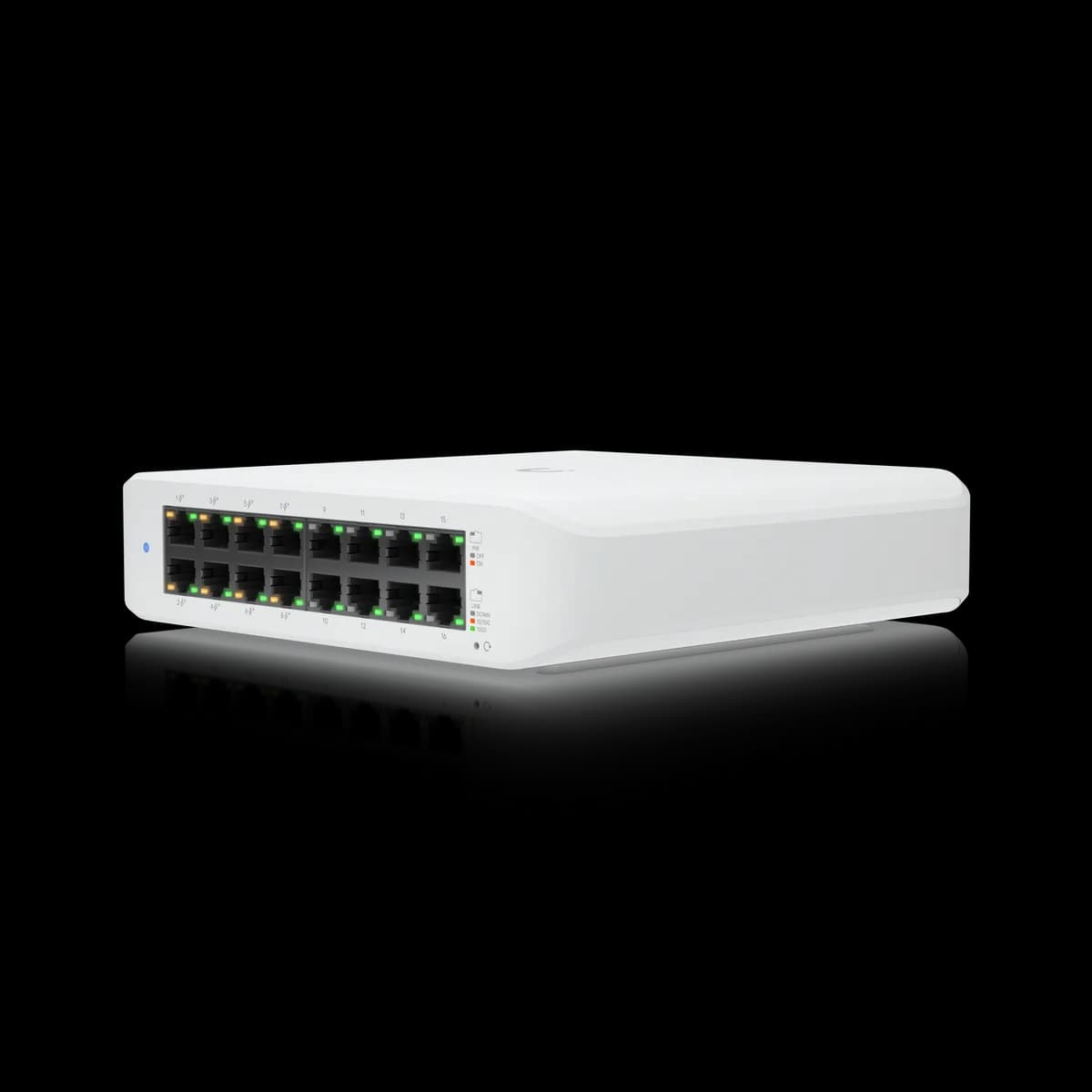
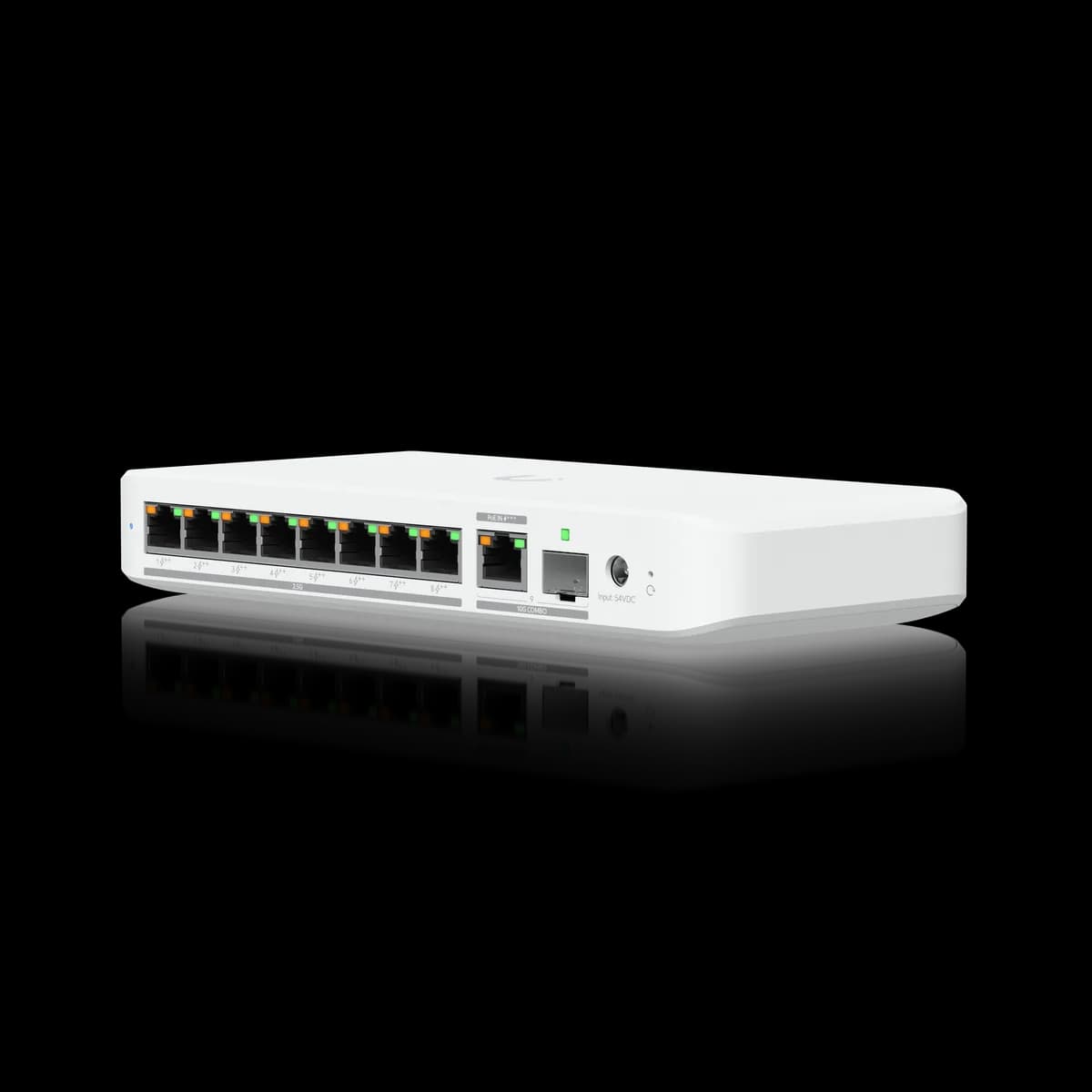
Both list at $199, but they solve opposite problems. Buy the Lite 16 PoE for more ports — 16 gigabit RJ45, eight with PoE+, a 45 W budget, and an included power supply — to feed many low-draw devices. Buy the Flex 2.5G 8 PoE for speed and PoE headroom — eight 2.5 GbE ports, 196 W of PoE++, and dual 10G uplinks — for multi-gig Wi-Fi backhaul. Note the Flex's power adapter is sold separately, roughly $79 extra.

Spec Comparison

SpecUniFi Lite 16 PoEUniFi Flex 2.5G 8 PoE
RJ45 Ports(16) 1 GbE (8 PoE+)(8) 2.5 GbE (PoE++)
UplinksNone (no SFP)(1) 10G RJ45 + (1) 10G SFP+
PoE Ports88
PoE Standards802.3af / at802.3af / at / bt
Total PoE Budget45 W196 W
Switching Capacity32 Gbps60 Gbps
LayerLayer 2Layer 2
Form FactorDesktop / wall (fanless)Desktop / wall / DIN
Max Power Draw60 W (incl. PoE)210 W (incl. PoE)
Power AdapterInternalSold separately
ManagementUniFi NetworkUniFi Network

Price & Philosophy

Same price, opposite trade-offs. The Lite 16 PoE and Flex 2.5G 8 PoE both list at $199. The Lite spends that on more ports — 16 gigabit RJ45 with an included PSU. The Flex spends it on speed — eight 2.5 GbE ports and 10G uplinks, with the power adapter sold separately. (Flex specs)

These two switches share a price tag but not a design philosophy. The Lite 16 PoE is the budget breadth play: pack twice as many devices onto one fanless box, all at gigabit. The Flex 2.5G 8 PoE is the multi-gig edge play: fewer ports, but every one of them runs at 2.5 GbE with serious PoE behind it.

Both are Layer 2 switches, so neither routes between VLANs — that job stays with your gateway. If you are still mapping the lineup, start with how to choose a UniFi switch or browse the Switches hub. The decision here turns on one question: do you need more ports, or faster ports?

Port Count vs Port Speed

More ports or faster ports? The Lite 16 PoE gives you 16 RJ45 ports, all 1 GbE (eight carry PoE+). The Flex 2.5G 8 PoE gives you eight RJ45 ports, all 2.5 GbE. Twice the port count versus 2.5 times the per-port speed — the core trade. (Lite specs)

This is the heart of the decision. The Lite 16 PoE wins on breadth: sixteen gigabit ports absorb a sprawl of cameras, phones, sensors, and gigabit access points without a second switch. None of those ports exceeds 1 Gbps, so a multi-gig device gains nothing here.

The Flex 2.5G 8 PoE wins on speed. Each of its eight ports runs at 2.5 GbE, which matters for Wi-Fi 6E and Wi-Fi 7 access points that push past a gigabit on the wired side, plus 2.5 GbE NAS boxes and workstations. Count your devices first: if you have many low-speed endpoints, breadth wins; if you have a handful of fast ones, speed wins.

PoE Budget

How much PoE? The Flex 2.5G 8 PoE delivers a 196 W PoE budget with PoE++ (60 W) output per port — over four times the Lite 16 PoE's 45 W budget across PoE+ ports. The Flex powers high-draw endpoints; the Lite suits modest gigabit loads. (Flex specs)

The PoE gap is wide and decisive. The Lite 16 PoE's 45 W budget is sized for a few low-draw devices — a couple of access points, a camera or two, a VoIP phone. Spread across its eight PoE+ ports, that budget runs out fast if your endpoints are hungry.

The Flex 2.5G 8 PoE's 196 W budget and PoE++ output are a different class: it can run PTZ cameras, Wi-Fi 7 access points, and door-access hubs at full power across all eight ports. Add up your devices' draw against each budget before you choose — as the buying guide stresses, that shared PoE ceiling is the real constraint, not the port count.

How do they uplink? The Flex 2.5G 8 PoE carries dual 10G uplinks — one 10G RJ45 and one 10G SFP+ — for a fast, fiber-ready backbone. The Lite 16 PoE has no SFP; it uplinks over one of its copper gigabit ports, capping the backbone at 1 Gbps. (Lite specs)

Uplinks are where the two diverge most outside of PoE. The Lite 16 PoE has no dedicated uplink port and no SFP cage at all, so it connects to your network through one of its standard gigabit RJ45 ports. That is fine when 16 gigabit clients share a 1 Gbps path back to the gateway, but it gives you no fiber option and no multi-gig headroom.

The Flex 2.5G 8 PoE is built to slot under a faster core: its 10G SFP+ accepts a fiber or DAC run, and its 10G RJ45 handles copper. The switching fabric backs this up — 60 Gbps on the Flex against 32 Gbps on the Lite. If you later outgrow eight ports, stepping up from the Flex to a Pro Max is the natural path, and a full rack is covered in the Pro 24 PoE vs Pro Max 24 PoE comparison.

Power, Mounting & Simplicity

Does the Flex include a PSU? No — and this is the buyer's trap. The Flex 2.5G 8 PoE's power adapter is sold separately for about $79, pushing its real cost near $278. The Lite 16 PoE ships with an internal power supply included in its $199. (Flex specs)

Read the price tags carefully here. The Lite 16 PoE has an internal power supply and a 60 W max draw, so $199 is the whole bill — plug it in and go. It is fanless and silent, mounting on a desk or wall, which suits a closet or living space where noise matters.

The Flex 2.5G 8 PoE needs its own adapter to hit a 210 W max draw, so budget the extra ~$79 before you commit; its true two-switch price is closer to $278, not $199. In exchange it adds DIN-rail mounting alongside desk and wall options, which earns it a place in network cabinets and equipment racks. Match the mounting and the real total cost to your install, not just the sticker price.

Who Should Buy Which

Once you know whether you need port count or port speed — and you have accounted for the Flex's separate power adapter — the choice between these two $199 switches is clear-cut. Here is how it breaks.

Buy the Lite 16 PoE if:

  • You need lots of gigabit ports cheaply. Sixteen 1 GbE ports feed cameras, phones, and gigabit APs on one fanless box, all included in the $199.
  • Your devices are low-draw. A 45 W PoE budget across eight PoE+ ports covers a modest set of endpoints with no separate PSU to buy.
  • Simplicity and silence matter. Internal power supply, fanless, desk or wall mount — plug it in and forget it.

Buy the Flex 2.5G 8 PoE if:

  • You run Wi-Fi 6E or Wi-Fi 7 APs. Eight 2.5 GbE ports remove the gigabit bottleneck on multi-gig access-point backhaul.
  • You need real PoE headroom or 10G uplinks. A 196 W PoE++ budget and dual 10G uplinks (RJ45 + SFP+) outclass the Lite, provided you budget the ~$79 adapter.
  • You mount in a cabinet or rack. DIN-rail support and a fiber-ready uplink fit structured installs.

Still deciding across the whole range? Start with how to choose a UniFi switch, or if you need a 24-port rack switch instead, compare the Pro 24 PoE vs Pro Max 24 PoE.

Frequently Asked Questions

Both switches list at $199. But the Lite 16 PoE includes its internal power supply, while the Flex 2.5G 8 PoE's power adapter is sold separately for about $79 — so the Flex's true cost is closer to $278 once you can actually power it on.

The Flex 2.5G 8 PoE. All eight of its RJ45 ports run at 2.5 GbE, plus it has dual 10G uplinks. The Lite 16 PoE runs all 16 of its ports at 1 GbE and has no SFP uplink, so its backbone tops out at gigabit speed.

The Flex 2.5G 8 PoE has a 196 W PoE budget with PoE++ (60 W) output per port. The Lite 16 PoE has a 45 W PoE budget across PoE+ ports, with eight of its 16 ports able to deliver power. The Flex suits high-draw devices; the Lite suits modest loads.

No. Both the Lite 16 PoE and the Flex 2.5G 8 PoE are Layer 2 only, so neither routes between VLANs. That job stays with your UniFi gateway. If you need on-switch routing, look at a Layer 3 model like the Pro 24 PoE.

No. The Lite 16 PoE has no SFP port and no multi-gig uplink — it connects through one of its copper gigabit ports, capping the backbone at 1 Gbps. For a 10G or fiber uplink at this size, choose the Flex 2.5G 8 PoE, which has both a 10G RJ45 and a 10G SFP+ port.