Comparison

UniFi G6 Instant vs G6 Bullet: Indoor or Out?

The $179 Wi-Fi G6 Instant and $199 PoE G6 Bullet share one 4K sensor. Compare indoor vs outdoor rating, install, IR range, and on-board recording here.

Should I buy the UniFi G6 Instant or the G6 Bullet?

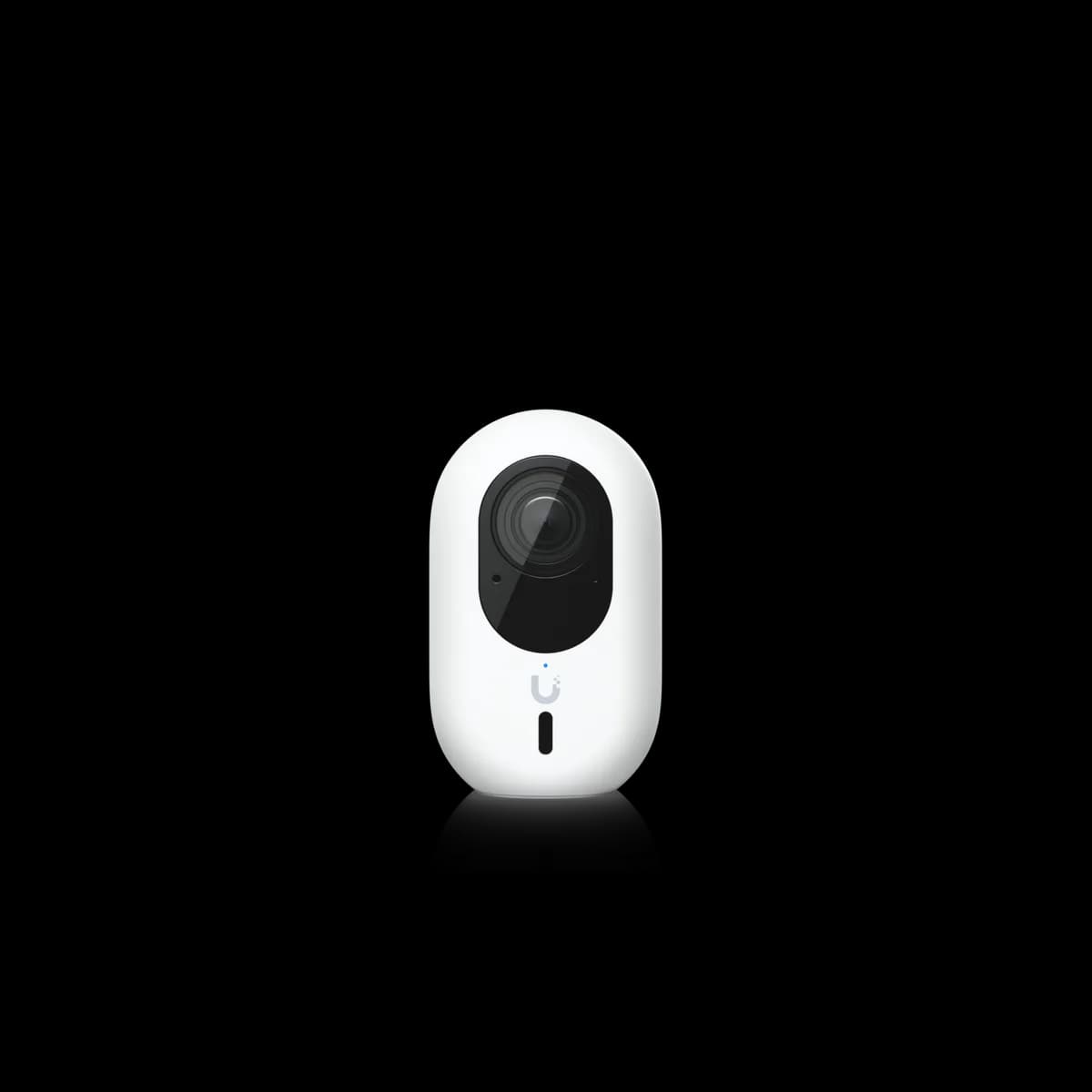
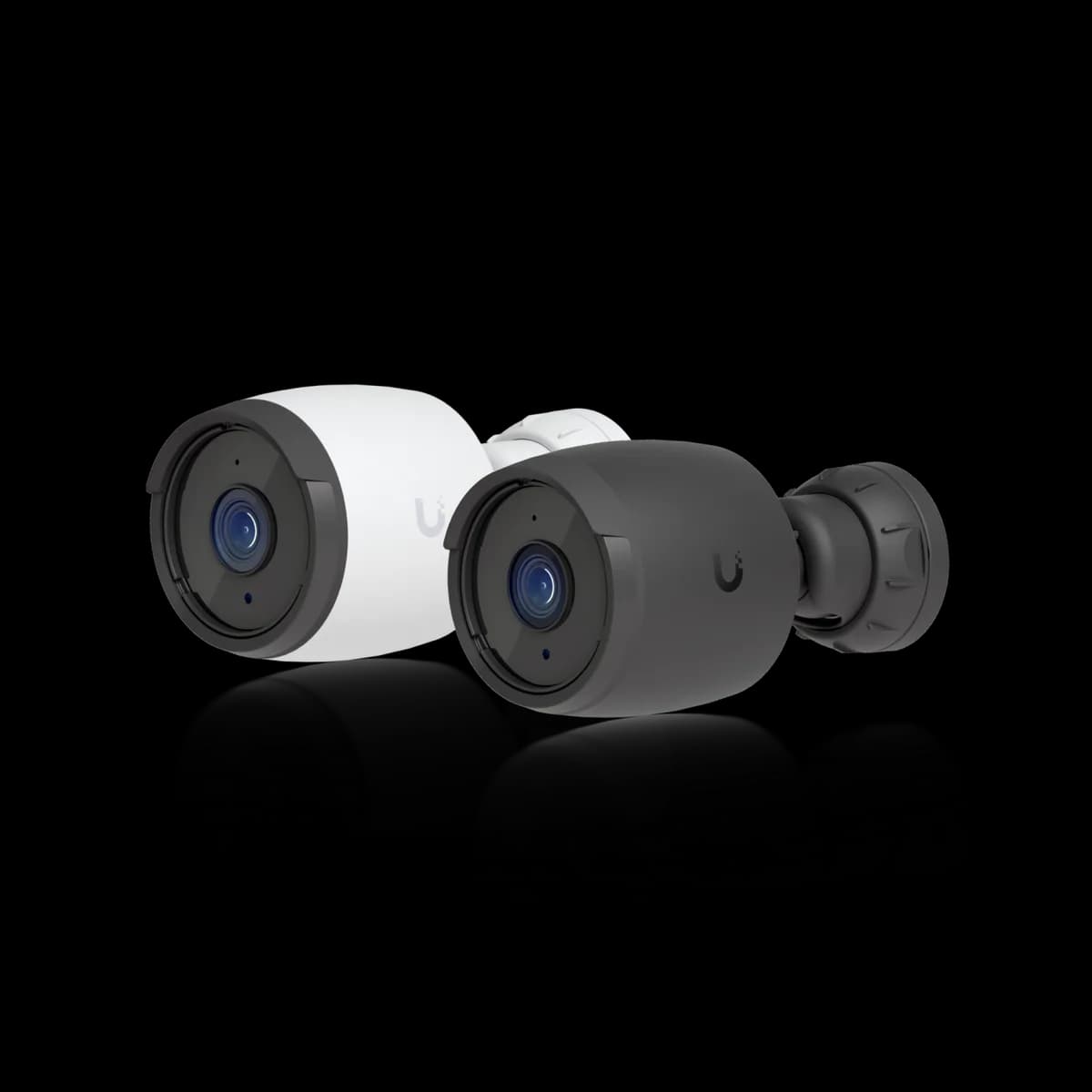
Buy on indoor versus outdoor, not image — both share a 1/1.8-inch 8MP 4K sensor, a 109.9° field of view, and the same Multi-TOPS AI. The $179 G6 Instant is an IPX5 splash-resistant indoor camera on Wi-Fi and USB-C, with a microSD slot for local recording. The $199 G6 Bullet is a true IP66 outdoor camera on wired PoE, with 30 m IR (five times the Instant's 6 m) but no on-board storage, so it needs a UniFi gateway or NVR running Protect.

Spec Comparison

SpecUniFi Protect G6 InstantUniFi Protect G6 Bullet
Form FactorCompact indoor (Wi-Fi)Outdoor bullet
Image Sensor1/1.8" 8MP1/1.8" 8MP
Max Resolution4K (3840 × 2160) at 30 fps4K (3840 × 2160) at 30 fps
Field of ViewH 109.9°H 109.9°
IR Night Vision6 m (20 ft)30 m (98 ft)
ConnectivityWi-Fi 802.11 a/b/g/n/ac + BluetoothWired — 10/100 RJ45
Power MethodUSB-C adapter (5V/2A); PoE via optional adapterPoE
Max Power Draw7 W9.9 W
Onboard StoragemicroSD (up to 1 TB)
Weather / Vandal RatingIPX5 / IK04IP66 / IK04
Operating Temp-20 to 40 °C (-4 to 104 °F)-20 to 50 °C (-4 to 122 °F)
AI DetectionsPerson, Vehicle, Animal + Face & License Plate (Multi-TOPS AI)Person, Vehicle, Animal + Face & License Plate (Multi-TOPS AI)

The Same Sensor, a Different Job

Same sensor? Yes. Both the G6 Instant and G6 Bullet use a 1/1.8" 8MP sensor, record 4K at 30 fps, cover a 109.9° horizontal field of view, and run the same Multi-TOPS AI for person, vehicle, and animal detection plus face and license-plate recognition. In daylight the picture is effectively identical. (G6 Instant specs)

So this is not a quality decision. The G6 Instant and G6 Bullet sit in the same G6 generation with matching optics, the same 4K resolution, and the same smart detections. What separates them is where each is built to live: the Instant is an indoor camera, the Bullet is an outdoor one.

That single fact drives everything else — the weather rating, how each is powered, how far it sees at night, and where the footage lands. If you are still mapping the lineup, start with how to choose a UniFi camera or browse the Security Cameras hub.

Indoor vs Outdoor: IPX5 vs IP66

Can the Instant go outside? No. The G6 Instant is rated IPX5 / IK04 — splash-resistant, an indoor camera, not weatherproof. The G6 Bullet is rated IP66 / IK04, a genuine outdoor camera that shrugs off rain and dust. If the camera will see weather, the Bullet is the only one of the two for the job. (G6 Bullet specs)

This is the hard gate, so be precise about it. IPX5 means the G6 Instant can handle a splash — a humid room, an accidental spray — but it is not sealed against sustained rain or dust the way an outdoor camera must be. Mount it indoors: a hallway, a doorway seen from inside the glass, a shop floor, a nursery.

The G6 Bullet's IP66 rating is the real outdoor seal, the same rating the outdoor G6 Turret carries. The Bullet also runs colder, rated to -20 °C to 50 °C versus the Instant's -20 °C to 40 °C. For a porch, a driveway, an eave, or a pole, the Bullet is the answer and the Instant is not a substitute.

Install: Wi-Fi + USB-C vs Wired PoE

Easier to install? Yes, slightly. The G6 Instant joins over Wi-Fi (802.11 a/b/g/n/ac) and powers from a USB-C adapter (5V/2A, 7 W), so no Ethernet run is needed — though PoE is available only through an optional adapter, not natively. The G6 Bullet is wired: one Ethernet cable carries both power (PoE, 9.9 W) and data to a switch.

The trade is convenience against reliability. The G6 Instant is the easy install — set it on a shelf or screw it to a wall near an outlet, join the Wi-Fi, done. There is no cable to fish through a wall. The cost is that Wi-Fi is a shared, contended link: a busy network or a weak signal can drop frames or knock the camera offline in a way a wired camera never does.

The G6 Bullet needs a cable run to a PoE switch, which is more work up front, but once it is in, the link is rock-solid and the same cable delivers power — no adapter, no outlet at the camera. For a permanent outdoor camera that is the right model. If you are sizing the switch, how to choose a UniFi switch covers PoE budget and port count; at 9.9 W the Bullet is an easy load on any PoE port.

Night Vision & Where Footage Lands

Record without an NVR? Only the G6 Instant — it has a microSD slot (up to 1 TB) and can record locally without a recorder. The G6 Bullet has no on-board storage and must record to a UniFi gateway or NVR running Protect. At night the Bullet sees far further: 30 m (98 ft) of IR versus the Instant's 6 m (20 ft).

The 5× IR gap follows the use case. The G6 Instant's 6 m reach is plenty for a room or a doorway, where the subject is close. The G6 Bullet's 30 m reach is built for a driveway, a yard, or a parking area, where you need to see something far from the camera in the dark.

Recording splits the same way. The Instant's microSD slot means it can stand alone — useful for a single indoor camera with no recorder yet — though it still slots into UniFi Protect when you add a gateway. The Bullet has no card, so a recorder is mandatory: there is nowhere else for its footage to go. Plan the recorder as part of buying a Bullet, not after.

What You Need to Run Each

What do you need? The G6 Instant needs only Wi-Fi and a USB-C outlet to start recording to its own microSD, and a UniFi gateway running Protect if you want it in the central system. The G6 Bullet needs a PoE switch port and a gateway or NVR running Protect — there is no stand-alone mode.

For a single indoor camera, the G6 Instant is the lowest-friction entry point in the lineup: Wi-Fi, a USB-C adapter, a microSD card, and it is recording. Add a gateway later and it folds into UniFi Protect alongside your other cameras, picking up the unified timeline and AI search.

The G6 Bullet assumes a Protect system from the start. It uplinks over Ethernet to a PoE switch, which carries power and data on one cable, and that switch connects to a gateway — a Dream Machine or Cloud Gateway with a Protect drive, or a dedicated NVR — that records and runs the AI. If you are sizing that recorder, how to choose a UniFi gateway walks through Protect storage; larger camera counts move to a dedicated NVR. Either way the switch and gateway get planned with the camera.

Who Should Buy Which

The image quality is a tie, so the decision is almost entirely indoor versus outdoor — and after that, how you want to power and record the camera.

Buy the G6 Instant if:

  • The camera is going indoors. IPX5 is splash-resistant, not weatherproof — keep it inside, out of the rain.
  • You want the easiest install. Wi-Fi plus a USB-C adapter means no cable run; set it down and go.
  • You want it to record on its own. The microSD slot (up to 1 TB) lets it record without an NVR, and it is the cheaper camera at $179.

Buy the G6 Bullet if:

  • The camera is going outdoors. IP66 is the true outdoor seal; this is the only one of the two that belongs on a porch, driveway, or pole.
  • You need to see far at night. 30 m of IR covers a yard or driveway, five times the Instant's 6 m.
  • You already run UniFi Protect on a gateway or NVR — the Bullet has no on-board storage and records there over a clean, reliable PoE link.

Still deciding across the range? Start with how to choose a UniFi camera, or once you are outdoors weigh the body shape in G6 Bullet vs G6 Turret. Or browse the full Security Cameras hub.

Frequently Asked Questions

No. The G6 Instant is rated IPX5, which is splash-resistant, not weatherproof — it is an indoor camera. For an outdoor location you need the G6 Bullet, which is rated IP66 against rain and dust. The two share the same 1/1.8-inch 8MP 4K sensor, so the picture is the same; only the weather sealing differs.

Yes. Both use the same 1/1.8-inch 8MP sensor, record 4K at 30 fps, cover a 109.9° horizontal field of view, and run the same Multi-TOPS AI engine for person, vehicle, and animal detection plus face and license-plate recognition. In daylight the image is effectively identical — the differences are weather rating, power, night-vision range, and storage, not picture quality.

The G6 Instant runs on Wi-Fi for data and a USB-C adapter (5V/2A, about 7 W) for power, so it needs no Ethernet run. PoE is available only through an optional adapter, not natively. The G6 Bullet, by contrast, is powered over a single Ethernet cable using standard PoE at 9.9 W.

Yes. The G6 Instant has a microSD slot supporting cards up to 1 TB, so it can record locally without a recorder — useful for a single indoor camera. The G6 Bullet has no on-board storage, so it must record to a UniFi gateway or NVR running Protect. Both can join a central UniFi Protect system when you add a gateway.

The G6 Bullet sees about 30 m (98 ft) in infrared, while the G6 Instant sees about 6 m (20 ft) — roughly five times farther for the Bullet. The Instant's 6 m is sized for a room or doorway; the Bullet's 30 m is built for a driveway, yard, or parking area where the subject is far from the camera.